Category: Best Phones

  • The Best Budget Phones You Can Buy and What to Look For

    The Best Budget Phones You Can Buy and What to Look For

    The best budget mobile phone in 2026 gets you a 120Hz OLED screen, a battery that lasts two days, and up to seven years of software updates for well under flagship money. Our top pick is the Google Pixel 9a. Below we rank nine more, explain what separates a good cheap phone from a bad one, and cover pricing in the US, UK and India.

    Our picks at a glance

    This table lists the ranking and the one reason each phone made it. Prices are official launch prices in US dollars unless noted. Budget phones get discounted often, so the price you pay today may be lower.

    Rank Phone Best for Launch price Chip Battery
    1 Google Pixel 9a Best overall $499 Tensor G4 5,100 mAh
    2 Samsung Galaxy A36 5G Best Samsung under $400 $399.99 Snapdragon 6 Gen 3 5,000 mAh
    3 Moto G Power (2025) Best durability $299.99 Dimensity 6300 5,000 mAh
    4 Moto G Stylus (2025) Best display and charging $399.99 Snapdragon 6 Gen 3 5,000 mAh
    5 Nothing Phone (3a) Best camera for the money £329 / $379 (US beta) Snapdragon 7s Gen 3 5,000 mAh
    6 Samsung Galaxy A26 5G Best under $300 $299.99 Exynos 1380 5,000 mAh
    7 Samsung Galaxy A16 5G Best under $200 $199.99 Dimensity 6300 (US) 5,000 mAh
    8 CMF Phone 2 Pro Best value in UK and India £219 / ₹18,999 Dimensity 7300 Pro 5,000 mAh
    9 Poco X7 Pro Best performance per rupee Varies (India) Dimensity 8400 Ultra 6,550 mAh (India)
    10 Samsung Galaxy S25 FE Best if you can stretch $649.99 Exynos 2400 4,900 mAh

    How we chose these phones

    We didn’t rank on raw specs alone. A cheap phone with a fast chip but two years of updates is a worse buy than a slightly slower one that stays secure until 2032. These are the five things we weighed, roughly in order of importance.

    1. Software support. How many years of Android upgrades and security patches the maker officially promises.
    2. Display. OLED panels and 120Hz refresh rates are now common under $400, so phones without them had to earn their place another way.
    3. Battery and charging. 5,000 mAh is the baseline. We looked at charging speed too, and whether wireless charging is included.
    4. Camera. Mainly the main sensor and processing. Extra lenses that add little (2MP macro cameras, we’re looking at you) counted for nothing.
    5. Build and water resistance. IP ratings, Gorilla Glass and drop testing matter more on a phone you might keep for four or five years.

    All specs come from manufacturer spec pages and launch announcements. We haven’t benchmarked these phones ourselves, so we rely on official data and the consensus from established reviewers.

    The best budget phones, ranked

    1. Google Pixel 9a: best overall

    ChipGoogle Tensor G4
    Display6.3 in, 120 Hz OLED
    Battery5,100 mAh, 23W
    PriceFrom $499

    Spec line: 6.3-inch pOLED (up to 120Hz, 2,700 nits peak) · Tensor G4 · 8GB RAM · 128GB or 256GB · 48MP main + 13MP ultrawide · 5,100 mAh · 23W wired, 7.5W wireless · IP68 · launched April 2025

    The Pixel 9a is the phone we’d hand to almost anyone with $500 to spend. It runs the same Tensor G4 chip as the more expensive Pixel 9, which means the AI features, call screening and photo processing are close to flagship level.

    The headline number is seven years. Google promises seven years of OS upgrades and security updates, matching its own flagships. A phone bought in 2025 is covered into 2032, which completely changes the cost per year.

    The camera is the other reason it tops the list. The 48MP main sensor isn’t huge, but Google’s processing produces some of the most consistent photos you can get at this price, especially of people and in mixed lighting. Night Sight works well, and video is solid for a phone at this price point.

    It also gets features that cheaper rivals skip: IP68 water resistance, wireless charging, and Google tools such as Circle to Search and Google Lens built into the system. The 5,100 mAh battery is the largest Google has put in a Pixel to date.

    Downsides: There’s no telephoto lens, 23W charging is slow next to Motorola and Nothing, and the base model has 128GB with no microSD slot. Tensor chips also run warmer and score lower in benchmarks than Snapdragon rivals, though that rarely shows up in daily use.

    Who should buy it: Anyone who wants the best camera and the longest support under $500, and anyone who plans to keep a phone for five years or more.

    Buying tip

    The Pixel 9a launched at $499 but is regularly discounted. Wait for a sale before you pay full price.

    2. Samsung Galaxy A36 5G: best Samsung under $400

    Spec line: 6.7-inch Super AMOLED, 120Hz · Snapdragon 6 Gen 3 · 6GB RAM (US) · 128GB · 50MP main with OIS + 8MP ultrawide + 5MP macro · 5,000 mAh · 45W wired · IP67 · launched March 2025

    The Galaxy A36 is the safe choice in Samsung’s range. It has a big, bright AMOLED display, a Snapdragon chip and 45W charging, which was a first for Samsung’s A3x line.

    Samsung promises six generations of Android upgrades and six years of security updates. That’s one year short of Google but far ahead of Motorola. The phone also runs One UI with many of the Galaxy AI features that started on the Galaxy S series, including Circle to Search.

    Its 50MP main camera has optical image stabilisation, which helps with low light and video. The 5MP macro lens is filler. The 8MP ultrawide is usable in good light and soft in the dark.

    Downsides: 6GB of RAM is on the low side for a phone that should last six years. There’s no wireless charging and no microSD slot.

    Who should buy it: Samsung users who want to stay in the ecosystem with Galaxy Watch, Galaxy Buds and Samsung Wallet, and anyone who prefers a larger screen than the Pixel 9a offers.

    3. Moto G Power (2025): best battery life and durability

    Spec line: 6.8-inch LCD, 120Hz · MediaTek Dimensity 6300 · 8GB RAM · 128GB + microSD · 50MP main + 8MP ultrawide · 5,000 mAh · 30W wired, 15W wireless · IP68 and IP69 · MIL-STD-810H · launched February 2025

    The Moto G Power is the toughest phone on this list. It carries both IP68 and IP69 ratings, which means it’s rated against submersion and high-pressure hot water jets. Motorola also says it passed MIL-STD-810H military-standard testing for drops and temperature extremes.

    Battery life is excellent because the Dimensity 6300 is an efficient chip and the LCD isn’t power hungry. It also adds 15W wireless charging, which is very rare at $299.99.

    8GB of RAM and a microSD slot are generous at this price. Motorola’s near-stock Android is clean and fast, with useful gestures like the chop for the flashlight.

    Downsides: The Dimensity 6300 is an entry-level chip, so demanding games will struggle. The screen is LCD, not OLED. Motorola’s update promise is much shorter than Samsung’s or Google’s, which is the main reason this phone isn’t higher.

    Who should buy it: Anyone who is hard on their phones, works outdoors, or wants multi-day battery life for around $300.

    Watch out

    Motorola promises far fewer years of Android upgrades than Samsung or Google. Check the official update policy for any Moto G before buying if you plan to keep it past three years.

    4. Moto G Stylus (2025): best display and fastest charging

    Spec line: 6.7-inch pOLED, 120Hz · Snapdragon 6 Gen 3 · 8GB RAM · 128GB or 256GB + microSD · 50MP Sony Lytia 700C main + 13MP ultrawide · 5,000 mAh · 68W wired, 15W wireless · IP68 · launched April 2025

    This is the phone for people who read, write and sketch on their screens. The 6.7-inch pOLED panel is the best display Motorola has put on a sub-$400 phone, and the built-in stylus is genuinely useful for notes and screenshots.

    68W wired charging is the fastest in the US part of this list. Add 15W wireless charging, 8GB of RAM, a microSD slot and IP68, and the spec sheet looks like it belongs to a phone costing $150 more.

    The main camera uses Sony’s Lytia 700C sensor, a step above the generic 50MP sensors in most rivals. Motorola’s processing is less consistent than Google’s, but daylight shots are good.

    Downsides: Like the G Power, the software support window is short. The stylus is passive, so it lacks pressure sensitivity and the precision of Samsung’s S Pen.

    Who should buy it: Note-takers, students and anyone who wants a big OLED screen and very fast charging for $399.99.

    5. Nothing Phone (3a): best camera for the money

    Spec line: 6.77-inch AMOLED, 120Hz · Snapdragon 7s Gen 3 · 8GB or 12GB RAM · 128GB or 256GB · 50MP main + 50MP 2x telephoto + 8MP ultrawide · 5,000 mAh · 50W wired · IP64 · launched March 2025

    The Phone (3a) is a standout choice because of its camera lineup. A dedicated 50MP 2x telephoto lens is very rare at this price. Most phones under $400 fake zoom by cropping the main sensor, which loses detail fast.

    The rest of the package is strong too. You get a Snapdragon 7s Gen 3, 50W charging, a bright 120Hz AMOLED screen and Nothing OS, one of the cleanest Android skins available. The transparent back and Glyph lights make it look unlike anything else here.

    Nothing promises three years of Android upgrades and six years of security patches. That’s behind Samsung and Google but ahead of Motorola.

    Downsides: In the US it’s sold through Nothing’s beta programme, so carrier support isn’t guaranteed and it isn’t sold in carrier stores. IP64 is a weaker water rating than IP67 or IP68. There’s no wireless charging.

    Who should buy it: UK and Indian buyers who want zoom photography on a budget, and US buyers comfortable checking network compatibility themselves.

    6. Samsung Galaxy A26 5G: best under $300

    Spec line: 6.7-inch Super AMOLED, 120Hz · Exynos 1380 · 6GB RAM (US) · 128GB + microSD · 50MP main + 8MP ultrawide + 2MP macro · 5,000 mAh · 25W wired · IP67 · launched March 2025

    The A26 brings Samsung’s six-year update promise down to $299.99. It also adds IP67 water resistance and a 120Hz AMOLED display, both of which were missing from Samsung’s cheaper phones until recently.

    The microSD slot gives you a cheap way to expand storage.

    Downsides: The Exynos 1380 is a few years old and noticeably slower than the Snapdragon 6 Gen 3. Charging tops out at 25W.

    Who should buy it: Buyers who want the longest software support and a good screen for around $300, and who don’t play demanding games.

    7. Samsung Galaxy A16 5G: best under $200

    Spec line: 6.7-inch Super AMOLED, 90Hz · Dimensity 6300 (US) · 4GB RAM (US) · 128GB + microSD · 50MP main + 5MP ultrawide + 2MP macro · 5,000 mAh · 25W wired · IP54 · launched late 2024

    At $199.99 the A16 5G does something no other phone in its class does well: it promises six generations of Android upgrades and six years of security patches. For a phone this cheap, that’s remarkable.

    You also get an AMOLED display, which looks far better than the LCD panels on most rivals at this price, plus a big battery and a microSD slot.

    Downsides: 4GB of RAM will feel tight within a couple of years, and the 90Hz screen isn’t as smooth as 120Hz rivals. The ultrawide and macro cameras are weak. IP54 only covers splashes.

    Who should buy it: First phones for kids, backup phones, and anyone who needs a reliable best budget cell phone for calls, messages, maps and social apps.

    Buying tip

    Check the RAM and chip on the exact model in your region. Samsung often uses different chips and RAM amounts for the same A-series name in different markets.

    8. CMF Phone 2 Pro: best value in the UK and India

    Spec line: 6.77-inch AMOLED, 120Hz · Dimensity 7300 Pro · 8GB RAM · 128GB or 256GB + microSD · 50MP main + 50MP 2x telephoto + 8MP ultrawide · 5,000 mAh · 33W wired · IP54 · launched April 2025

    CMF is Nothing’s cheaper sub-brand, and the Phone 2 Pro is the best budget friendly phone we can point to in the UK and India. At £219 or ₹18,999, it offers a 2x telephoto camera that phones costing twice as much often skip.

    The Dimensity 7300 Pro is a capable mid-range chip, comfortably faster than the Dimensity 6300 in the Galaxy A16 and Moto G Power. The 120Hz AMOLED screen is bright and sharp.

    The design has a fun party trick: removable accessories, including a lanyard and lens attachments, screw onto the back. It’s lighter and thinner than most phones with a 5,000 mAh battery.

    Downsides: IP54 is basic splash protection. In the US it’s only sold through Nothing’s beta programme. Software support is shorter than Samsung’s.

    Who should buy it: Buyers in the UK, Europe and India who want the best camera and performance mix under £250 or ₹20,000.

    9. Poco X7 Pro: best performance per rupee

    Spec line: 6.67-inch 1.5K AMOLED, 120Hz · Dimensity 8400 Ultra · 8GB or 12GB RAM · 256GB or 512GB · 50MP Sony LYT-600 main + 8MP ultrawide · 6,550 mAh (India) / 6,000 mAh (global) · 90W wired · IP66, IP68 and IP69 · launched January 2025

    Poco has a reputation for packing near-flagship performance into cheap phones, and the X7 Pro continues it. The Dimensity 8400 Ultra is a seriously fast chip, well ahead of anything else in this list except the Galaxy S25 FE.

    The Indian model has a 6,550 mAh silicon-carbon battery, while the global version has 6,000 mAh. Both charge at 90W. The sharper 1.5K AMOLED display and the IP68 and IP69 ratings round out a spec sheet that’s hard to match at its price.

    Downsides: It isn’t sold officially in the US. Xiaomi’s HyperOS includes preinstalled apps that you’ll want to remove. The camera setup is basic beyond the main sensor.

    Who should buy it: Gamers and power users in India and other markets where Poco sells officially.

    10. Samsung Galaxy S25 FE: best if you can stretch

    Spec line: 6.7-inch Dynamic AMOLED 2X, 120Hz · Exynos 2400 · 8GB RAM · 128GB, 256GB or 512GB · 50MP main + 12MP ultrawide + 8MP 3x telephoto · 4,900 mAh · 45W wired, 15W wireless · IP68 · launched September 2025

    At $649.99 the Galaxy S25 FE sits at the top of the mid-range rather than the budget tier. We include it because it’s the phone to buy if a budget phone won’t quite do and a full Galaxy S model is too much.

    It’s the only phone here with a 3x optical telephoto lens. The Exynos 2400 was Samsung’s flagship chip in 2024, and the S25 FE gets seven years of OS and security updates plus the full Galaxy AI feature set from the samsung-galaxy-s lineup.

    Downsides: It costs $150 more than the Pixel 9a. The battery is slightly smaller than the rest of this list, and the Exynos chip isn’t as efficient as current Snapdragon flagships.

    Who should buy it: Anyone who wants flagship features such as telephoto zoom, wireless charging and IP68 at a mid-range price. It’s also our answer to the best mid-range phone question in the FAQ.

    Specs side by side

    This table puts the key hardware next to each other. Charging speeds are the maximum each phone supports. Most of these phones don’t include a charger in the box.

    Phone Display Refresh RAM / storage Battery Wired / wireless Water rating
    Pixel 9a 6.3 in pOLED 120Hz 8GB / 128-256GB 5,100 mAh 23W / 7.5W IP68
    Galaxy A36 5G 6.7 in AMOLED 120Hz 6GB / 128GB (US) 5,000 mAh 45W / none IP67
    Moto G Power (2025) 6.8 in LCD 120Hz 8GB / 128GB 5,000 mAh 30W / 15W IP68, IP69
    Moto G Stylus (2025) 6.7 in pOLED 120Hz 8GB / 128-256GB 5,000 mAh 68W / 15W IP68
    Nothing Phone (3a) 6.77 in AMOLED 120Hz 8-12GB / 128-256GB 5,000 mAh 50W / none IP64
    Galaxy A26 5G 6.7 in AMOLED 120Hz 6GB / 128GB (US) 5,000 mAh 25W / none IP67
    Galaxy A16 5G 6.7 in AMOLED 90Hz 4GB / 128GB (US) 5,000 mAh 25W / none IP54
    CMF Phone 2 Pro 6.77 in AMOLED 120Hz 8GB / 128-256GB 5,000 mAh 33W / none IP54
    Poco X7 Pro 6.67 in AMOLED 120Hz 8-12GB / 256-512GB 6,550 mAh (India) 90W / none IP66, IP68, IP69
    Galaxy S25 FE 6.7 in AMOLED 120Hz 8GB / 128-512GB 4,900 mAh 45W / 15W IP68

    Software updates: the spec most people miss

    Update promises vary more between budget phones than any other spec. A longer promise means your phone stays secure, keeps getting new features, and stays usable with banking and payment apps for longer.

    Brand / phone Android upgrades Security updates
    Google Pixel 9a 7 years 7 years
    Samsung Galaxy S25 FE 7 generations 7 years
    Samsung Galaxy A36, A26, A16 5G 6 generations 6 years
    Nothing Phone (3a) 3 years 6 years
    Motorola Moto G series Short; varies by model Shorter than Samsung or Google

    Here’s how that plays out over time. A $499 Pixel 9a kept for seven years costs about $71 a year. A $299 phone that stops getting security patches after three years costs about $100 a year, and you’re shopping again sooner.

    What to look for in a budget phone

    If you’re starting from scratch, our full guide on how to choose a phone covers every spec in depth. These are the things that matter most at the budget end.

    Set a realistic price tier

    The phrase best budget mobile means different things at different prices. We split the market into three tiers.

    • Under $200 (or under ₹15,000): Expect entry-level chips, 4GB to 6GB of RAM and plastic builds. The best options here focus on battery life and long software support.
    • $200 to $350 (₹15,000 to ₹25,000): This is where AMOLED screens, 120Hz, IP67 and decent main cameras become standard. Most people get the best value here.
    • $350 to $500 (₹25,000 to ₹50,000): You get Snapdragon chips, faster charging, better cameras and sometimes wireless charging or a telephoto lens.

    Check the chip, not just the RAM

    The processor decides how fast the phone feels in three years. In this list, the Dimensity 6300 and Exynos 1380 are fine for social apps, messaging and video streaming but weak for gaming.

    The Snapdragon 6 Gen 3, Snapdragon 7s Gen 3 and Dimensity 7300 Pro are a clear step up. The Dimensity 8400 Ultra, Tensor G4 and Exynos 2400 are in a different class again.

    RAM matters too. We’d treat 6GB as the minimum for a phone you plan to keep longer than three years, and 8GB as the comfortable choice.

    Prioritise the display

    You look at the screen all day, so it’s one of the best places to spend. An AMOLED or OLED panel gives you deeper blacks, better contrast and usually better battery life with dark mode.

    A 120Hz refresh rate makes scrolling and animations smoother. It’s now standard even on $300 phones. Brightness matters for outdoor use, so look for a high peak brightness figure if you’re outside a lot.

    Battery capacity and charging speed

    Almost every budget phone now has a battery around 5,000 mAh, and some Chinese brands go well past 6,000 mAh using silicon-carbon cells. Capacity alone doesn’t tell the full story, because an efficient chip and a well-tuned screen extend battery life just as much.

    Charging speed varies widely, from 23W on the Pixel 9a to 90W on the Poco X7 Pro. Faster charging is convenient, but check whether a compatible charger comes in the box. Most don’t.

    Wireless charging is still rare under $500. Only the Pixel 9a, the two Moto G phones and the S25 FE have it on this list.

    Cameras: ignore the lens count

    Budget phones love to advertise three or four cameras. In practice the main sensor does almost all the work, and 2MP macro or depth cameras add nothing useful.

    A high mega pixel count isn’t a good guide either. Sensor size, optical image stabilisation and the maker’s processing matter much more. That’s why the Pixel 9a’s 48MP camera beats many phones with bigger numbers on the box.

    A real telephoto lens is the one extra camera worth paying for. The Nothing Phone (3a), CMF Phone 2 Pro and Galaxy S25 FE have one.

    Durability and repairs

    Look for an IP rating. IP67 or IP68 means the phone can survive being dropped in water. IP54 or IP64 only covers splashes and rain.

    Screen glass matters too, and so does how easy the phone is to fix. If you want to keep a phone for five years, a battery swap at year three or four is likely. Our guide to the most repairable phone options explains which brands sell parts and publish repair guides.

    5G, bands and carrier support

    Every phone on this list supports 5G, but band support differs by region. A phone imported from another country may miss key bands, have no Wi-Fi calling, or fail to work on some carriers at all.

    In the US, buy a model sold officially for the US market to be sure it works on T-Mobile, AT&T and Verizon. Samsung, Google and Motorola all sell US versions that work across the major networks.

    Storage and microSD

    128GB is the starting point for every phone here. If you shoot a lot of video or download offline media, it fills up fast.

    Samsung’s A16 and A26, both Moto G phones and the CMF Phone 2 Pro still have microSD slots. That’s a cheap way to add storage. The Pixel 9a, Galaxy A36, Nothing Phone (3a) and S25 FE don’t, so pick the bigger storage option at purchase if you need it.

    Budget phone prices by region

    Prices for the same phone vary a lot between markets. This table shows official launch prices for the base storage model in the US, UK and India.

    Phone US launch price UK launch price India launch price
    Google Pixel 9a $499 £499 ₹49,999
    Nothing Phone (3a) $379 (beta programme) £329 ₹24,999
    CMF Phone 2 Pro $279 (beta programme) £219 ₹18,999
    Apple iPhone 16e $599 £599 ₹59,900

    The pattern is clear. Google and Apple price aggressively in the US and expensively in India. Nothing, CMF, Poco and other Chinese-backed brands are much better value in India and the UK.

    Best budget phone in India

    The Indian market is the most competitive in the world for cheap phones. Brands such as Poco, Redmi, iQOO, Realme, Oppo, Vivo, Motorola and Samsung all launch new models every few months, so the specific best pick changes quickly.

    Under ₹20,000, our choice is the CMF Phone 2 Pro at ₹18,999. It’s the only phone in this price band we know of with a 50MP 2x telephoto camera, and the Dimensity 7300 Pro gives it plenty of performance.

    Between ₹20,000 and ₹30,000, the Nothing Phone (3a) at ₹24,999 is our camera pick and the Poco X7 Pro is our performance pick. The Poco’s 6,550 mAh battery and 90W charging are especially appealing for heavy users.

    Above ₹30,000, the Pixel 9a costs ₹49,999 in India, which makes it much less of a bargain than in the US. Indian buyers can often get more hardware for less, but the Pixel still wins on camera consistency and update length.

    Buying tip

    Bank offers and exchange deals in India can knock several thousand rupees off launch prices. Compare the effective price after offers, not the sticker price.

    What about iPhones?

    Apple doesn’t make a true budget phone anymore. The cheapest current model is the iPhone 16e at $599, launched in February 2025.

    It has the A18 chip, a 6.1-inch OLED screen, a single 48MP camera, IP68 water resistance and Apple’s own C1 modem. The downsides are a 60Hz display, no ultrawide camera and no MagSafe.

    If you want iOS for less, a used or refurbished iPhone 13 is a sensible option. It still gets iOS updates and has dual cameras. At the other end, the base iPhone 17 is the better long-term buy if your budget can stretch, since it now has a 120Hz display and starts with 256GB.

    For most people who just want the most phone for the money, Android wins under $500. The Pixel 9a and Galaxy A36 give you better screens, bigger batteries and similar update lengths for less.

    Carrier deals versus unlocked phones

    US carriers often sell budget phones at big discounts or even free with a new line. These deals can be genuinely good, but they usually lock you into a payment plan or a minimum service period.

    Buying unlocked costs more up front but lets you switch carriers and use cheaper prepaid plans. Over two years, an unlocked phone on a low-cost prepaid plan is often the cheapest way to own a best budget friendly cell phone.

    T-Mobile, AT&T and Verizon customers can use any phone on this list that’s sold officially in the US. That covers the Pixel, Samsung and Motorola models. Nothing and CMF phones sold through beta programmes may not get full support on every network, so check compatibility before buying.

    Red flags to avoid

    Some cheap phones look like bargains but aren’t. These are the warning signs we’d watch for.

    • No stated update policy. If the maker won’t say how long it will update the phone, assume it’s short.
    • Old chips with new names. Some budget phones reuse chips that are three or four years old. Check the exact processor, not just the marketing name.
    • HD+ LCD screens over $250. At that price, you should be getting at least FHD+ and ideally AMOLED.
    • Lots of tiny cameras. Four cameras where three are 2MP is a sign of spec-sheet padding.
    • Grey-market imports. They can miss bands, lack warranty support, and sometimes come with unofficial software.

    Our final pick

    The Google Pixel 9a is the best budget mobile phone for most people. Seven years of updates, IP68, wireless charging and the best camera in its class make it the easiest recommendation at $499, especially when it’s on sale.

    If you want to spend less, the Galaxy A26 5G is our choice under $300 and the Galaxy A16 5G under $200. In the UK and India, the CMF Phone 2 Pro is the best value we can find. If you can stretch to $650, the Galaxy S25 FE gives you a proper telephoto lens and flagship-level support.

    FAQ

    How long should a phone last?

    A good budget phone should last four to six years if the maker supports it. Software is usually the limit: the Pixel 9a and Galaxy S25 FE get seven years of updates, Samsung’s A-series gets six, and many cheaper brands offer far less. The battery is the other factor. Expect noticeable wear after three or four years, and plan for a battery replacement if you want to keep the phone longer.

    What is the best mid-range phone in 2026?

    We’d pick the Samsung Galaxy S25 FE at $649.99. It has a 3x telephoto camera, IP68, wireless charging, the Exynos 2400 chip and seven years of updates. If you want to spend less, the Pixel 9a at $499 is the best mid-range pick for camera quality and software.

    Which mobile is best between ₹10,000 and ₹20,000?

    The CMF Phone 2 Pro at ₹18,999 is our top choice in this range. It offers a 120Hz AMOLED screen, a Dimensity 7300 Pro chip, a 5,000 mAh battery and a 50MP 2x telephoto camera. New models from Redmi, Poco, iQOO, Realme and Samsung’s Galaxy M series arrive often, so compare the chip, display type and update policy before you buy.

    What is the best cheap and good Android phone?

    For the US, the Samsung Galaxy A16 5G at $199.99 is the best cheap Android phone because of its AMOLED screen and six years of updates. If you can spend around $300, the Galaxy A26 5G adds a 120Hz display and IP67 water resistance, and the Moto G Power (2025) adds better durability and wireless charging.

    Is it worth buying a budget phone over a used flagship?

    For most people, yes. A new budget phone comes with a fresh battery, a full warranty and its entire update window still ahead of it. A used flagship can have a better camera, but it often has a worn battery and only a couple of years of updates left.

    Which budget phone has the best battery life?

    The Poco X7 Pro has the largest battery on our list, at 6,550 mAh in India and 6,000 mAh elsewhere, with 90W charging. In the US, the Moto G Power (2025) is our pick thanks to its efficient chip, 5,000 mAh battery and wireless charging.
  • The Most Repairable Phones You Can Buy and Why It Matters

    The Most Repairable Phones You Can Buy and Why It Matters

    The most repairable phone you can buy right now is the Fairphone 6. You can swap its battery, screen, cameras and USB-C port at your kitchen table with a single screwdriver. Below we rank seven phones by how easily you can fix them, explain what makes a repairable cell phone different from the rest, and cover why it matters for your wallet, the planet and how long your phone stays useful.

    What actually makes a phone repairable

    Every phone is technically “repairable” if a skilled technician has enough heat, suction cups and patience. That is not what you care about. A truly repairable phone is one where the common failures (dead battery, cracked glass, worn charging port) can be fixed quickly, cheaply and without destroying something else in the process.

    When we judge repairability, these factors carry the most weight:

    • How you get inside. Standard screws beat glue. A back you can pop off beats a glass sandwich you have to heat to 80°C.
    • Battery access. The battery is the part you are most likely to replace. Phones that use screws, stretch-release tabs or electrically released adhesive are far kinder than ones that bond the cell straight to the frame.
    • Modular design. If the USB-C port sits on its own small board, replacing it costs a few euros. If it is soldered to the main board, the same fault can write off the phone.
    • Parts availability. A brilliant design means nothing if you cannot buy the screen. Official parts stores, iFixit partnerships and long parts commitments matter.
    • Parts pairing. Some manufacturers serialize components, so a genuine replacement screen or camera throws warnings or loses features unless the manufacturer’s software “approves” it.
    • Repair documentation. Free, official repair guides make a huge difference for you and for independent shops.
    • Software support. A phone you can physically fix but that stopped getting security updates three years ago is still headed for the drawer.

    That last point is the one most repairability rankings skip, and we think it belongs in the score. Hardware longevity and software longevity are two halves of the same question: how long can you keep this phone?

    The 7 most repairable phones at a glance

    Phone Chipset Display Battery Battery swap Software support
    Fairphone 6 Snapdragon 7s Gen 3 6.31 in, 10 to 120 Hz 4,415 mAh Screws, minutes Updates to 2033
    Fairphone 5 Qualcomm QCM6490 6.46 in, 90 Hz 4,200 mAh Tool-free Security updates to 2031
    HMD Skyline Snapdragon 7s Gen 2 6.55 in, 144 Hz 4,600 mAh Screws and pull tabs 2 OS upgrades, 3 years security
    Samsung Galaxy XCover 7 MediaTek Dimensity 6100+ 6.6 in LCD 4,050 mAh Removable, no tools Samsung enterprise schedule
    iPhone 17 / iPhone 16 A19 / A18 6.3 in / 6.1 in Not published Back opens, tools needed Apple typically gives 6+ years
    iPhone Air A19 Pro 6.5 in, 120 Hz Not published Metal-cased cell, tools needed Apple typically gives 6+ years
    Google Pixel 10 Tensor G5 6.3 in, 120 Hz 4,970 mAh Tools and adhesive 7 years

    Now the detail on each one, starting with the phone that sets the benchmark.

    1. Fairphone 6: the most repairable phone you can buy

    ChipSnapdragon 7s Gen 3
    Display6.31 in, 10 to 120 Hz
    Battery4,415 mAh
    Price€599 / £499

    Fairphone announced its sixth-generation phone in June 2025, and it keeps the Dutch company’s reputation as the reference point for repairability. iFixit awarded it a perfect 10 out of 10, matching the Fairphone 5 before it. If you only read one section of this article, this is the phone to look at.

    Design and display

    The Fairphone 6 is noticeably smaller and lighter than its predecessor, which was one of the most common complaints about the Fairphone 5. The 6.31-inch LTPO pOLED panel scales from 10 to 120 Hz, so you get smooth scrolling without the battery penalty of a fixed high refresh rate. It is protected by Corning Gorilla Glass 7i.

    The body is built from swappable sections rather than a sealed slab. Fairphone also added accessory mounting points on the back so you can screw on a lanyard, a card holder or a stand. It sounds gimmicky until you realize the same screw system is what keeps the internals so easy to reach.

    A physical slider switch triggers Fairphone Moments, a stripped-back mode that limits you to a handful of chosen apps. It is a nice touch if you are trying to use your phone less, and it costs nothing in repairability.

    Hardware and what’s in the box

    Inside, the Snapdragon 7s Gen 3 chipset is a big step up from the Fairphone 5’s ageing Qualcomm chip. You get 8GB of RAM and 256GB of storage, plus a microSD slot, which has become rare above the budget tier.

    The main camera uses a 50MP Sony Lytia 700C sensor, paired with a 13MP ultrawide and a 32MP selfie camera. That is a modest setup next to a Pixel or iPhone, and photography remains the area where Fairphone trails rivals at the same price.

    The box is minimal. Fairphone does not include a charger, and you should expect to supply your own USB-C cable and power brick.

    Repairability in practice

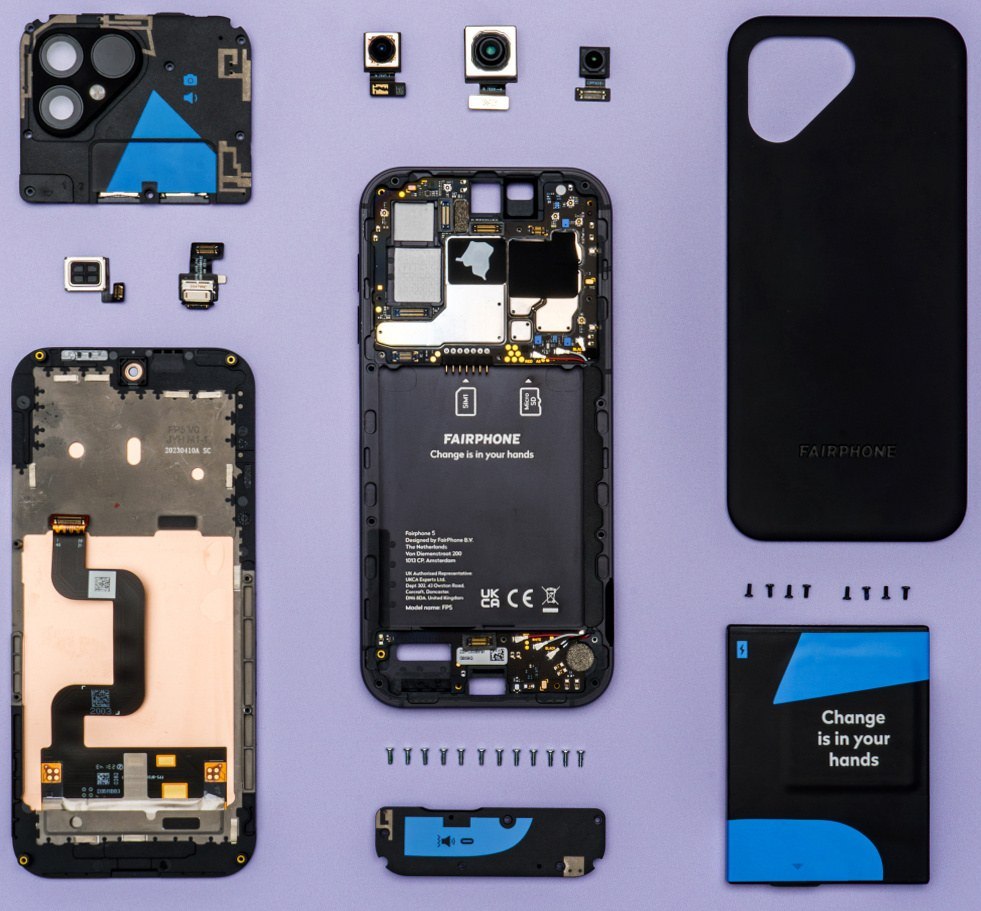
    This is where the Fairphone 6 earns its place. Twelve modules are designed to be replaced by you, including the battery, display, USB-C port, cameras, speaker and SIM/microSD tray. Every one uses the same Torx screws, so one screwdriver handles all of it.

    Fairphone sells every module through its own store, at prices that make DIY repair genuinely worthwhile. A new battery costs a fraction of what a third-party shop would charge to replace a glued-in cell on a flagship.

    One change from the Fairphone 5 is worth knowing about. The older phone let you pull the battery out by hand after removing the back. The Fairphone 6 secures it with screws instead. It adds a minute to the job, but the swap is still trivial.

    Software and performance

    The Fairphone 6 shipped with Android 15, and Fairphone promises seven Android version upgrades and security updates through 2033. That is eight years of support, on par with Google and Samsung flagships and better than almost every mid-range phone.

    The software is close to stock Android, with a few Fairphone additions. If you want to avoid Google services entirely, a de-Googled version running /e/OS is sold through Murena, Fairphone’s long-term partner.

    Performance is solid mid-range. The Snapdragon 7s Gen 3 handles everyday apps, video streaming and casual games without trouble. Heavy 3D gaming is not its strength, and you will notice it next to a Snapdragon 8 Elite phone.

    Battery life and charging

    The 4,415 mAh battery is replaceable, which matters more than its raw capacity. When it degrades in three or four years, you swap it in a few minutes instead of replacing the phone. Fairphone rates the phone for 30W wired charging with a compatible charger.

    Availability, network and pricing

    The Fairphone 6 launched at €599 in Europe and £499 in the UK, sold directly by Fairphone and through selected European retailers and carriers. North American availability has historically come through Murena’s /e/OS models rather than Fairphone’s own store, and US carrier band support is narrower than on phones built for that market.

    Watch out

    Check band support with your carrier before importing a Fairphone. A phone that cannot reach your carrier’s main LTE and 5G bands is not a bargain, however repairable it is.

    Who should buy it: anyone in Europe or the UK who wants to keep a phone for six to eight years and is happy with a mid-range camera in exchange.

    2. Fairphone 5: still the easiest battery swap

    Teardown of Fairphone 5, showing internal components of the phone. (Fairphone 5)
    Photo: Fairphone / Wikimedia Commons, CC BY-SA 2.0
    ChipQualcomm QCM6490
    Display6.46 in, 90 Hz
    Battery4,200 mAh
    Launch price€799

    The Fairphone 5 launched in September 2023 and also scored 10 out of 10 with iFixit. It remains on sale, often discounted, and it is still one of the best repairable phones available.

    Its party trick is the battery. You pry off the plastic back with a fingernail, lift the battery out and drop a new one in, no tools required. It is the closest any modern phone gets to old BlackBerry phones and other early-2010s handsets with snap-off backs.

    The Qualcomm QCM6490 is an industrial version of a Snapdragon chip, chosen because Qualcomm commits to supporting it for far longer than consumer chips. That choice let Fairphone promise security updates through 2031, and the company has said it wants to stretch support even further.

    The trade-offs are real. The Fairphone 5 is chunky and heavy, the 90 Hz OLED is fine rather than impressive, and the camera lags well behind similarly priced phones. It is also rated only IP55, so it handles rain and dust but not a dunk in the bath.

    Who should buy it: you want the absolute simplest DIY repairs, you find it at a good discount, and you care more about longevity than performance.

    3. HMD Skyline: a mainstream phone designed to be fixed

    ChipSnapdragon 7s Gen 2
    Display6.55 in, 144 Hz
    Battery4,600 mAh
    Price£399 / €499

    HMD, the Finnish company that made Nokia-branded phones for years, launched the Skyline in July 2024. It is the best example of a repairable phone that does not ask you to compromise on looks. The squared-off design nods to the old Nokia Lumia line, and it feels like a normal mid-range phone in the hand.

    The spec sheet is competitive for its price. You get a 6.55-inch 144 Hz pOLED display, the Snapdragon 7s Gen 2, a 108MP main camera, a 13MP ultrawide and a 50MP 2x telephoto. Charging runs at 33W wired and 15W wireless with Qi2 magnets.

    HMD calls this its “Gen 2” repairability design, developed with iFixit. The back panel comes off with a handful of screws, and the battery uses pull tabs rather than permanent glue. HMD says you can replace the screen in around 20 minutes. Parts and repair kits are sold through iFixit.

    The weak spot is software. HMD promises two Android OS upgrades and three years of security updates. That is short next to the seven or eight years Fairphone, Google and Samsung now offer, and it undercuts the long-life promise of easy hardware repair. Our view: a phone you can fix for six years but that only gets patches for three is a three-year phone for most people.

    Who should buy it: you want easy repairs and a strong camera at a lower price, and you plan to upgrade within three or four years.

    4. Samsung Galaxy XCover 7: the removable battery survivor

    ChipDimensity 6100+
    Display6.6 in LCD
    Battery4,050 mAh, removable
    RuggedIP68, MIL-STD-810H

    Samsung’s XCover line is built for warehouses, building sites and delivery drivers, and it keeps a feature mainstream phones abandoned a decade ago: a user-removable battery. Launched in early 2024, the Galaxy XCover 7 lets you pop the back off and swap the battery in seconds, while still carrying an IP68 rating and MIL-STD-810H drop testing.

    That combination is unusual. Most manufacturers argued that removable batteries made waterproofing impossible. The XCover proves it can be done, at the cost of a thicker body.

    The hardware is modest. The MediaTek Dimensity 6100+ is an entry-level 5G chip, the 6.6-inch screen is an LCD rather than OLED, and charging tops out at 15W. A microSD slot, a programmable side key and glove-friendly touch sensitivity point to its work-phone roots. Samsung also sells a Pro version with a stronger chip and better screen.

    Batteries are easy. Screens and ports are less so, because once you go beyond the battery you are into a conventional Samsung teardown. Samsung’s own self-repair parts program covers some Galaxy models, though the company’s earlier partnership with iFixit ended in 2024 amid disagreements over parts pricing and batteries glued to display assemblies.

    Who should buy it: you are hard on phones, you value a hot-swappable battery for long shifts, and you do not need flagship power or camera quality.

    5. iPhone 17 and iPhone 16: Apple’s quiet repairability turnaround

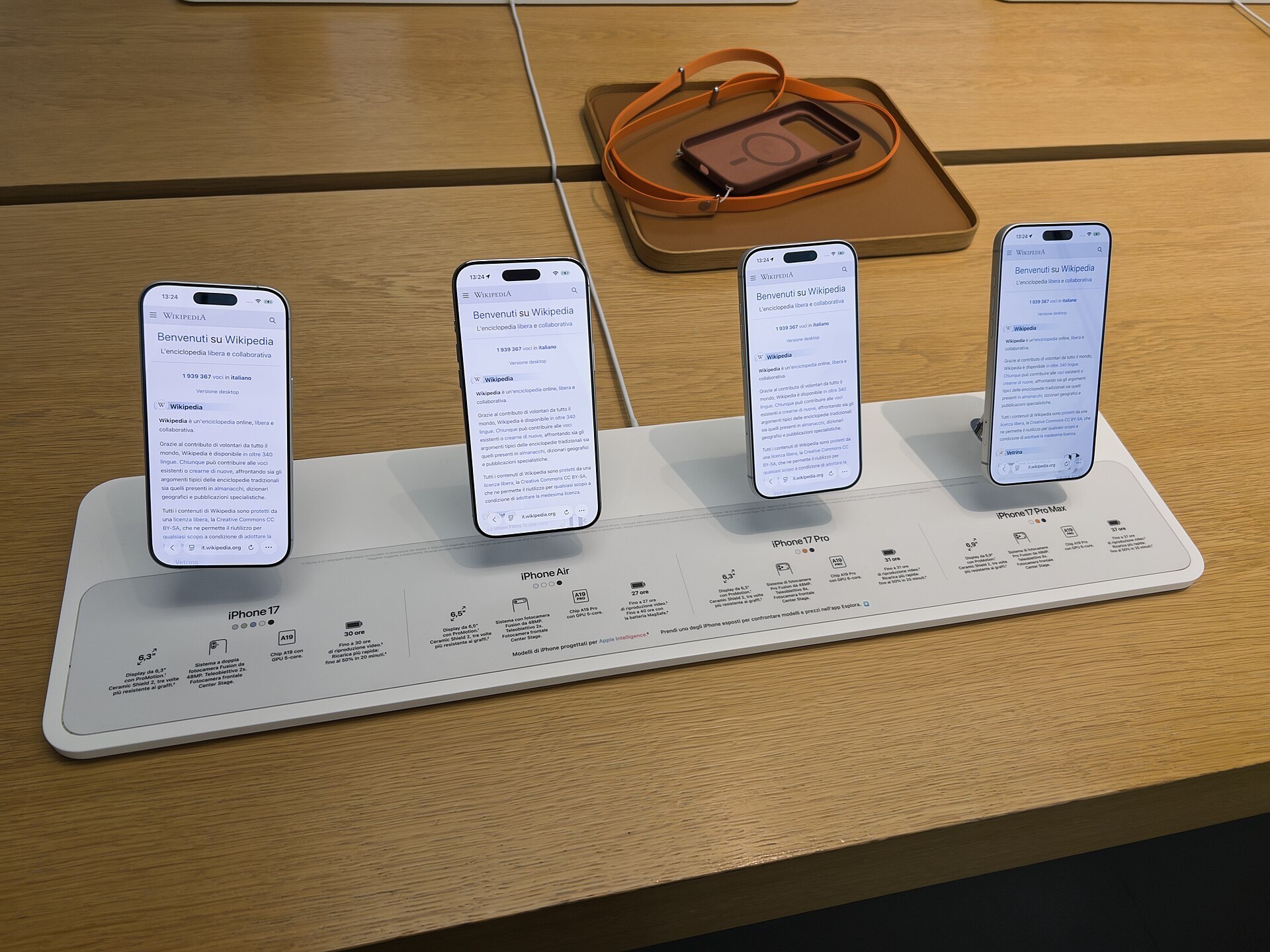
    The iPhone 17, Air, 17 Pro, and Pro max side by side (IPhone 17)
    Photo: Premeditated / Wikimedia Commons, CC BY-SA 4.0
    ChipA19 (iPhone 17)
    Display6.3 in, 120 Hz
    StorageFrom 256GB
    PriceFrom $799

    Apple was the villain of the right-to-repair movement for years, and you will still hear that reputation repeated. It is out of date. The iPhone 15, 16 and 17 series are meaningfully easier to fix than the phones that came before them.

    The design changes that matter

    The shift started with the iPhone 14, whose redesigned internal frame let technicians open the phone from the front or the back. That matters because the back glass is one of the most commonly cracked parts. Before, a broken back often meant swapping the entire housing, a repair that cost close to the price of a new screen.

    The iPhone 16 and 16 Plus then introduced a battery adhesive that releases when you apply a low-voltage electrical current. Instead of prying a bonded cell out with plastic picks and isopropyl alcohol, a technician (or a careful owner) can loosen it cleanly. iFixit rated the iPhone 16 a 7 out of 10, a big jump for an iPhone.

    The iPhone 17, released in September 2025, keeps the dual-entry design. It is also a strong phone in its own right, with a 6.3-inch 120 Hz ProMotion display (a first for the base model), the A19 chip and 256GB of storage as standard.

    Parts, tools and pairing

    Apple’s Self Service Repair program, launched in the US in 2022 and since expanded to more countries, sells genuine parts and repair manuals directly to you. You can buy the tools or rent a full repair kit for a week instead of paying for heavy equipment you will use once.

    Parts pairing used to be the bigger problem. Apple serializes many components, and swapping in a genuine screen or battery from another iPhone used to trigger warnings or disable features. Since iOS 18, the Repair Assistant built into Settings can calibrate genuine used parts on the device itself, and the phone tells you when a third-party part is installed rather than blocking it outright. It is still more controlled than Android, but far more workable than it was.

    Apple’s own out-of-warranty battery service for recent models costs about $99 in the US. That is a reasonable price for a phone you are likely to keep for five or six years, especially since Apple historically supports iPhones with iOS updates for six years or more.

    Buying tip

    If you want the most repair-friendly iPhone on a budget, the iPhone 16 has dropped to $699 and has the electrically released battery adhesive that makes battery swaps so much easier.

    Who should buy it: you are staying in Apple’s ecosystem and want a phone that independent shops and Apple can both fix without drama for years.

    6. iPhone Air: thin, but not a repair nightmare

    ChipA19 Pro
    Display6.5 in, 120 Hz
    Thickness5.64 mm
    PriceFrom $999

    When Apple unveiled the iPhone Air in September 2025, repair advocates braced for the worst. Ultra-thin phones usually mean more glue, more fragile parts and less room to work. The Air turned out better than expected.

    Apple moved most of the logic board into the camera plateau at the top of the phone, leaving the flat lower section mostly for the battery. iFixit’s teardown found the battery sits in a metal casing, which protects it from bending during removal and makes it far less risky to pull out than a soft pouch cell. The rigid case also reduces the chance of puncturing the cell, a real fire risk with traditional glued batteries.

    The trade-offs are elsewhere. The Air has a single 48MP rear camera, a smaller battery than the iPhone 17 Pro, and it is eSIM-only in every market. Its thin titanium frame is also more exposed to bending forces than a thicker phone, though Apple and early durability testers have shown it holds up to normal use.

    It ranks below the iPhone 17 mainly on value and because the thinner body leaves less margin for clumsy DIY work. For a shop technician, it is a straightforward job.

    Who should buy it: you want the thinnest iPhone and accept compromises on battery and camera, without giving up repairability.

    7. Google Pixel 10: excellent support, average teardown

    ChipTensor G5
    Display6.3 in, 120 Hz
    Battery4,970 mAh
    PriceFrom $799

    Google’s case for repairability rests more on support than on screwdrivers. The Pixel 10, launched in August 2025, carries seven years of Android OS and security updates, the same commitment Google has offered since the Pixel 8. That is the longest promise in the US market alongside Samsung’s flagships.

    Google also partners with iFixit to sell genuine Pixel parts and publish official repair guides, so you can buy a real screen, battery or charging port rather than gambling on unbranded parts from a marketplace.

    The hardware is a strong all-rounder. The Tensor G5 is the first Google chip built by TSMC, and the base Pixel 10 finally adds a 5x telephoto camera alongside its 48MP main and 13MP ultrawide sensors. Built-in Qi2 magnets mean MagSafe-style accessories attach without a case.

    The teardown is where it falls behind. Like most flagships, the Pixel 10 opens through an adhesive-sealed screen, and recent Pixels have drawn criticism from repairers for stubborn battery adhesive. It is fixable, especially with official parts and guides, but it is not a ten-minute job for a first-timer. The phone’s IP68 rating depends on that seal, so a DIY repair needs fresh adhesive to keep water out.

    As for the Pixel 11, Google has not announced it at the time of writing. Based on Google’s usual schedule it would arrive in late summer, but we will not guess at its design until there is official information or credible reporting.

    Who should buy it: you want the cleanest Android experience and the longest support window, and you are happy to use a repair shop rather than fixing it yourself.

    The least repairable phones: what to avoid

    The worst performers share a few traits. Foldables top the list. Their inner folding screens are expensive, delicate and tightly integrated with the hinge, and a replacement can cost a large share of the phone’s price. They are improving, but you should budget for screen protection plans if you buy one.

    Ultra-premium flagships with batteries bonded to the display assembly are next. When the battery and screen come as one part, a simple battery swap becomes a costly screen replacement. iFixit criticized Samsung for exactly this pattern on several Galaxy models.

    Phones from brands with no official parts channel round out the list. Many budget brands sell great hardware for the money, but if you cannot buy a genuine screen two years later, your options shrink to whatever unbranded part a marketplace seller happens to stock.

    Why repairability matters

    It saves you real money

    A new mid-range phone costs $400 to $600, and a flagship costs $800 to well over $1,000. A replacement battery, by contrast, costs tens of dollars on a Fairphone and around $99 through Apple for recent iPhones. A charging port module can cost less than a takeaway meal.

    Batteries are the single most common reason people replace working phones. Lithium-ion cells lose capacity with every charge cycle, and after two or three years many phones struggle to last a day. If you can swap the battery cheaply, a three-year phone becomes a six-year phone.

    It keeps devices out of landfill

    Most of a phone’s lifetime carbon footprint comes from manufacturing, not from charging it. Mining the metals, making the chips and assembling the device generate far more emissions than years of daily use. Keeping a phone in service longer is one of the most effective things you can do to reduce its impact, and repairability is what makes that practical.

    E-waste is also a growing problem. The UN’s Global E-waste Monitor has repeatedly found that only a fraction of discarded electronics are formally collected and recycled. A phone that stays in your pocket for six years is a phone that does not need recycling yet.

    It protects your independence as an owner

    When only the manufacturer can fix your phone, the manufacturer sets the price and decides when your phone is “too old” to service. Repairable designs and fair parts access let independent shops compete, which keeps repair prices honest. It also means a cracked screen on holiday can be fixed in a local shop the same day.

    The repair math: when fixing beats replacing

    Here is a simple way to decide what makes sense for your situation. Compare the cost of the repair to how many more years of software support your phone has left.

    Scenario Fix it? Why
    Battery worn, 4+ years of updates left Yes Cheapest way to add years
    Cracked screen, 4+ years of updates left Usually yes Even a pricey screen beats a new phone
    Cracked screen, under 1 year of updates left Probably not You will replace it soon anyway
    Charging port faulty on a modular phone Yes Often a cheap, quick module swap
    Water damage on a sealed flagship Get a quote first Can affect the board, not just one part

    A useful rule of thumb: if the repair costs less than a quarter of the price of a comparable new phone, and you have at least two years of updates left, fix it. This is also why we weigh software support so heavily in our rankings. The Fairphone 6’s 2033 support window makes every repair over its life easy to justify.

    When you are weighing up how to choose a phone in the first place, put “years of updates” and “battery replacement cost” near the top of the list, next to price and camera.

    Right to repair: how the rules are changing

    Repairability is no longer just a brand choice. Laws in Europe and several US states are forcing manufacturers to make phones easier and cheaper to fix.

    European Union

    Since 20 June 2025, EU ecodesign rules apply to smartphones and tablets sold in the bloc. Manufacturers must keep spare parts available for seven years after a model stops being sold, provide operating system updates for at least five years after that point, and meet minimum battery durability standards (at least 800 charge cycles while keeping 80% of capacity).

    Phones sold in the EU must also carry an energy label that includes a repairability class from A to E, alongside drop resistance, battery endurance and water resistance information. It is the easiest way for European buyers to compare repairability in a shop.

    The EU Battery Regulation goes further. From February 2027, portable batteries in devices like phones are meant to be removable and replaceable by the user, although the rules include exemptions for phones with highly durable batteries and strong water resistance. How manufacturers respond to those exemptions will shape phone design for the rest of the decade.

    United States

    There is no federal right-to-repair law for phones, but several states have passed their own. New York’s Digital Fair Repair Act took effect in 2024. California’s law requires manufacturers to provide parts, tools and documentation for seven years on products that cost more than $100. Minnesota and Oregon went further, with Oregon specifically targeting parts pairing on devices made from 2025 onward.

    Because manufacturers rarely build separate phones for individual states, these laws tend to improve repair access for everyone in the US. Apple’s expansion of Self Service Repair and its looser parts-pairing rules arrived in the same period these laws were being debated, and that is not a coincidence.

    The honest downside of repairable phones

    Read the Fairphone community forums for long enough and you will find owners who are frustrated with their phones. The complaints are worth taking seriously because they reveal something the marketing does not.

    Repairable is not the same as reliable. A phone that is easy to fix can still need fixing more often than a sealed flagship. Some owners report replacing modules more than once, dealing with software bugs, or waiting longer for updates than they would on a Pixel. Others are unhappy that they paid flagship-adjacent money for a mid-range camera.

    There are structural reasons for this. A small company like Fairphone has a fraction of the engineering budget of Apple, Google or Samsung. Modular designs use more connectors, and every connector is a potential point of failure. Screws and seams also make it harder to achieve top-tier water resistance, which is why both recent Fairphones are rated IP55 rather than IP68.

    None of this makes Fairphone a bad choice. It means you should go in with clear expectations. You are buying a phone that will be cheap and easy to keep alive for many years, not one that will never give you trouble. If having a phone that simply works with zero fuss matters more to you than fixing it yourself, an iPhone 17 or Pixel 10 with an affordable official repair channel may suit you better.

    How to check repairability before you buy

    You do not need a teardown video to make a smart decision. Run through this checklist before you buy any phone:

    1. Look up the iFixit repairability score. iFixit publishes scores out of 10 for most major phones after its teardowns. Anything 7 or above is good for a modern phone.
    2. Check the EU label if you are in Europe. The A to E repairability class on the energy label gives you a standardized comparison.
    3. Search the manufacturer’s site for a parts store or self-repair program. Apple, Google, Samsung, Fairphone and HMD all offer some form of official parts access. Many budget brands do not.
    4. Find the software support end date. Look for a specific year, not vague promises. Seven years or more is now the standard to aim for.
    5. Price a battery replacement. Check what the manufacturer charges out of warranty. This is the repair you are most likely to need.
    6. Check for parts pairing restrictions. Search for owner reports on whether genuine replacement parts lose features.
    7. Consider your local repair options. A well-known model from a major brand will have far more independent shop support than a niche import.

    Buying tip

    Before you buy, search for the official price of a replacement battery and screen for that exact model. If the manufacturer will not tell you, that tells you something too.

    Our verdict

    The Fairphone 6 is the most repairable phone you can buy and the one to get if you live in Europe or the UK and want to keep a phone for close to a decade. The Fairphone 5 is a cheaper route to the same philosophy, with the easiest battery swap on the market.

    If you want a mainstream phone with easy repairs and a better camera for the money, the HMD Skyline is a smart pick, as long as you accept its shorter software support. Hard-working users who want a battery they can swap mid-shift should look at the Galaxy XCover 7.

    In the US, the most practical repair-friendly choices are the iPhone 17 (or the discounted iPhone 16) and the Google Pixel 10. Neither matches Fairphone for DIY simplicity, but both combine long software support with genuine parts, official guides and wide repair-shop coverage. For most people, that combination is what really keeps a phone alive.

    FAQ

    What is the most repairable phone in 2026?

    The Fairphone 6 is the most repairable phone currently available. It earned a 10 out of 10 repairability score from iFixit, has 12 user-replaceable modules that all use the same screwdriver, and comes with software support through 2033.

    Is a repairable cell phone worth it if I’m not good with tools?

    Yes. Repairable phones are also cheaper and faster for repair shops to fix, so you still benefit even if you never open the phone yourself. Shorter labor time and cheaper parts mean lower repair bills.

    Are iPhones repairable now?

    Much more than they used to be. The iPhone 14 and later can be opened from the front or back, the iPhone 16 introduced a battery adhesive that releases with electrical current, and Apple sells genuine parts and manuals through Self Service Repair. iPhones still use parts pairing, but the Repair Assistant in iOS 18 and later makes genuine replacements much easier to calibrate.

    Which phones still have removable batteries?

    The Fairphone 5 lets you remove the battery by hand after taking off the back cover. Samsung’s Galaxy XCover 7 and XCover 7 Pro also have user-removable batteries while keeping IP68 water resistance. The Fairphone 6 battery is replaceable in minutes but secured with screws.

    Are repairable phones waterproof?

    Some are, but usually less so than sealed flagships. The Fairphone 5 and Fairphone 6 are rated IP55, which covers rain and splashes but not submersion. The Galaxy XCover 7 shows a removable battery and IP68 can coexist, though the phone is thicker as a result.

    Do repairable phones get software updates for as long as flagships?

    It depends on the brand. Fairphone leads with support through 2031 for the Fairphone 5 and 2033 for the Fairphone 6. HMD offers much less on the Skyline, with two OS upgrades and three years of security patches. Always check the end date before you buy, because software support decides how long a repair stays worthwhile.

    Will EU rules make all phones repairable?

    They are pushing hard in that direction. Since June 2025, phones sold in the EU must have spare parts available for seven years after sales end, minimum battery durability and a repairability label. From 2027, the EU Battery Regulation aims to make batteries user-replaceable, with some exemptions for highly durable, water-resistant designs.

  • Smartphone Buying Guide: How to Choose Your Next Phone

    Smartphone Buying Guide: How to Choose Your Next Phone

    To choose a phone, set a budget first, pick iOS or Android, then compare how many years of software updates you get, the battery, the camera and the screen size. Processor speed and megapixel counts matter far less than most spec sheets suggest. This guide covers each decision in the order that saves you the most money and regret.

    RAM8 GB (Android)
    Storage128 GB, ideally 256
    Updates5+ years promised
    Refresh rate90 Hz or higher
    ChargingUSB-C, 25 W+

    Phone, cell phone, mobile phone, smartphone: what the words mean

    People search for the same device under several names, and the differences are mostly regional.

    Phone is short for telephone. That instrument dates back to the 1870s, and the clipped form came into use within a few years. The root is the Greek phōnē, meaning “voice” or “sound.” That is why the same combining form turns up in microphone, headphone, saxophone and even Anglophone (a speaker of English).

    The word also works as a verb. Used with an object, you phone someone. Used without an object, you phone in, phone home or phone ahead. The past tense is “phoned.” “Phone it in” means doing the bare minimum, which is a fair description of a lot of budget phone marketing.

    Cell phone is the American term. It comes from the cellular network design, where coverage is split into “cells,” each served by its own tower. Mobile phone is the British, Irish and Australian term, and you will hear “mobile” on its own across most of Europe. Smartphone describes any phone with a full operating system, apps, a touchscreen and internet access.

    In 2025 almost every cell phone sold in the US or UK is a smartphone. Basic “feature phones” and flip phones still exist for people who want fewer distractions, longer battery life or something simple for a child or older relative. Everything below applies to smartphones, but the budget and network sections apply to any phone.

    Step 1: Set your budget before you look at a single spec sheet

    Phones fall into price tiers. The gaps between them have narrowed a lot in the last five years, and that should shape how much you spend.

    Tier Typical US price What you get What you give up
    Budget Under $300 Decent screen, big battery, basic cameras Weaker low-light photos, shorter updates on some brands, slower chips
    Midrange $300 to $700 Strong chip, good main camera, 120 Hz screen, long updates on Google and Samsung Telephoto zoom, premium materials, fastest charging
    Flagship $800 to $1,300 Best cameras with zoom, brightest screens, top chips Value; you pay heavily for the last 15%
    Foldable $1,000 to about $2,000 Tablet-size or pocket-size folding screens Durability, battery size, repair costs

    The midrange tier is where most people should start looking. Google’s Pixel 9a launched at $499 in 2025, and Apple’s iPhone 16e launched at $599 in February 2025. Both run the same software features as their makers’ expensive models, with fewer cameras and simpler builds.

    Think in cost per year, not sticker price

    This is the most useful way to compare phones, and almost nobody does it. Divide the price by the number of years you will realistically keep the device.

    Scenario Price Years kept Cost per year
    Midrange phone with 7 years of updates $500 5 $100
    Flagship replaced every 2 years $1,200 2 $600
    Flagship kept until updates end $1,200 6 $200
    Budget phone with 2 years of updates $200 2 $100

    The budget phone and the midrange phone cost the same per year. The midrange one, though, gives you a better camera, a faster chip and security patches for longer. A flagship isn’t a bad buy if you keep it. It becomes an expensive habit if you upgrade every two years without a reason.

    Buying tip

    Phones from Apple, Samsung and Google drop in price fast. Prices often fall within a few months of launch, and the previous year’s model drops sharply when the new series arrives. Buying a phone six months after launch is the easiest saving you will make.

    Step 2: iPhone or Android

    Choose your platform second, because it narrows everything else.

    Choose an iPhone if you already use a Mac, iPad or Apple Watch, if your family relies on iMessage and FaceTime, or if you want one company handling hardware, software and repairs. iPhones hold resale value better than most Android phones. That partly offsets the higher price when you sell or trade in later.

    Choose Android if you want more choice of size, price, design and features. Android gives you foldables, phones with 100 W charging, phones with 7,000 mAh batteries, stylus phones like Samsung’s Galaxy S Ultra series, and deep customisation. Google, Samsung, OnePlus, Motorola, Xiaomi and Nothing all compete hard, and that competition benefits you.

    Switching is easier than it used to be. Apple and Google both offer transfer tools for contacts, photos and messages. RCS messaging now works between iPhone and Android in many markets, which brings typing indicators, read receipts and high-quality photos and video to cross-platform chats. You still lose purchased apps, though. Some Apple-specific features, such as Apple Watch pairing, simply don’t carry over.

    Watch out

    Apple Watch only works with iPhone. If you own one and switch to Android, it becomes a drawer ornament. Galaxy Watch and Pixel Watch don’t work with iPhones either.

    Step 3: Check how long the phone will get software updates

    This is the spec that matters most and shows up least in adverts. Updates bring new features, but the security patches are the important part. A phone that has stopped getting patches becomes riskier for banking, email and work apps, and some apps eventually stop supporting it.

    Brand Recent update promise
    Google Pixel 7 years of OS and security updates (Pixel 8 and later)
    Samsung Galaxy S and Z flagships 7 years of OS and security updates (Galaxy S24 series onward)
    Samsung Galaxy A Varies by model; check the specific phone
    Apple iPhone No fixed public number; iPhones have historically received new iOS versions for about six years or more
    Other Android brands Varies widely; budget models often get the shortest support

    Apple doesn’t publish a set number of years, but its record speaks for itself. The iPhone XS and XR from 2018 received iOS 18 in 2024.

    Regulation is also pushing the industry forward. Under the EU’s ecodesign rules, which took effect on 20 June 2025, phones sold in the EU must receive operating system updates for at least five years after the model stops being sold there. The same rules require batteries that keep at least 80% of their capacity after 800 full charge cycles. They also add an energy label that includes a repairability score. That label is a quick, standardised way to compare models if you shop in Europe.

    The practical rule is simple. If a phone launches with fewer than four years of promised updates, it should be cheap enough that replacing it soon doesn’t bother you.

    Step 4: Processor, RAM and storage

    The chip

    Current flagship chips include Apple’s A-series, Qualcomm’s Snapdragon 8 Elite family, MediaTek’s Dimensity 9000 series and Google’s Tensor. All are far faster than everyday tasks require. Messaging, social media, browsing, streaming video and photos run smoothly on any of them.

    Chip choice starts to matter in four situations:

    • Heavy mobile gaming. Snapdragon and Apple chips generally lead for sustained performance and game compatibility.
    • On-device AI. Features such as Apple Intelligence and Galaxy AI lean on the chip and RAM.
    • Keeping the phone for 5+ years. A stronger chip ages more gracefully.
    • Battery efficiency. Newer chips built on smaller manufacturing processes usually run cooler and last longer.

    Midrange chips like the Snapdragon 7 series, MediaTek Dimensity 7000 and 8000 series, and Google’s Tensor in the Pixel “a” phones are perfectly fine for most people. The budget tier is where you can feel the difference, with slower app launches, stutter in scrolling and weaker camera processing.

    RAM

    For Android, 8 GB is the sensible floor in 2025, and 12 GB is common on flagships. AI features are the main reason. Apple Intelligence requires 8 GB of RAM, which is why only the iPhone 15 Pro and later models support it. Avoid 4 GB Android phones unless the price is very low and the use is very light.

    Storage

    Buy 128 GB at minimum and 256 GB if you shoot a lot of video. 4K video eats space quickly, and most flagships no longer accept microSD cards. Some budget and midrange Android phones still do, which is a real advantage.

    Paying to step up from 128 GB to 256 GB at purchase usually costs less than years of cloud storage subscriptions. It also means you won’t spend your third year deleting photos to install an update.

    Step 5: Display and size

    Size first

    Hold the phone in a shop if you can. Spec sheets list the diagonal, but width and weight decide comfort.

    • Compact (around 6.1 in or smaller): easier one-handed use, fits small pockets, usually smaller battery.
    • Standard (6.2 to 6.5 in): the sweet spot for most people.
    • Large (6.7 in and up): best for video, reading and gaming, and usually the biggest batteries. They can get heavy, with some Ultra and Pro Max models weighing over 220 g.

    Panel type and refresh rate

    OLED (Samsung calls it AMOLED) delivers deep blacks, strong contrast and better efficiency with dark content. It is now standard from the midrange up. LCD survives mainly on cheap phones.

    Refresh rate is how often the screen updates each second. A 120 Hz screen makes scrolling look noticeably smoother than 60 Hz, and once you’re used to it, 60 Hz feels sluggish. Look for 90 Hz minimum. LTPO displays can drop to 1 Hz for static content, which saves battery and enables always-on displays.

    Brightness

    Peak brightness figures above 2,000 nits are common on flagships, and some phones advertise 3,000 nits or more. Those peaks only apply to small areas or HDR content. Still, a brighter phone is easier to read outdoors in summer. Reviews that measure full-screen brightness are more useful than launch claims.

    A detail most guides skip: PWM flicker

    Many OLED screens dim themselves by flickering rapidly, a technique called pulse-width modulation. Most people never notice. A minority get headaches or eye strain, especially at low brightness. If that sounds like you, look for reviews that report the PWM frequency. Higher is generally gentler, and several Android brands now advertise high-frequency dimming as a feature.

    Step 6: Battery life and charging

    Why mAh comparisons mislead

    Battery capacity is measured in milliamp-hours (mAh). Most Android phones sit between 4,500 and 5,000 mAh, and several Chinese brands now fit 6,000 to 7,000 mAh into slim bodies. They do it with silicon-carbon battery chemistry.

    But capacity is only half the equation. Chip efficiency, screen brightness and software tuning matter just as much. Apple doesn’t advertise mAh at all, yet iPhones regularly post strong battery results because the hardware and software are tuned together.

    Comparing mAh across brands tells you very little. Look for independent battery tests that run the same routine on every phone, and compare those numbers instead.

    Charging speed

    Charging type What to expect
    15 to 27 W wired Roughly 1.5 to 2 hours for a full charge; typical of iPhones and Pixels
    45 W wired Galaxy S Ultra territory; around an hour
    80 W and up Common on OnePlus, Xiaomi and other Chinese brands; often under 40 minutes
    Wireless (Qi/Qi2) Convenient overnight; slower and warmer than wired

    Two cautions apply. Most phones no longer ship with a charger in the box, so budget for one if you don’t own a fast USB-C charger. And the very fastest charging often needs the brand’s own adapter and cable.

    USB-C is now universal on new phones. Apple moved the iPhone to USB-C with the iPhone 15 in 2023, and the EU’s common charger rules have applied to phones since the end of 2024. One cable now charges almost everything you own, and that includes newer AirPods cases.

    Protecting the battery long term

    Batteries wear out, and that wear is the main reason people replace otherwise working phones. Many models now let you cap charging at 80%. Recent iPhones and Samsung’s Galaxy phones both offer this, and it slows wear noticeably over years of use. Also check what an official battery replacement costs for the model you’re considering. It is usually the cheapest way to get another two years out of a phone.

    Step 7: Cameras

    Ignore the megapixel headline

    A 200 MP sensor doesn’t automatically beat a 48 MP one. Image quality depends on sensor size, lens quality and, above all, the processing software. Google, Apple and Samsung have spent a decade refining that software, and it shows in how their phones handle tricky light.

    What to actually look for:

    • Main sensor size. Larger sensors gather more light, which means better night photos and natural background blur. Some Chinese flagships use 1-inch-type sensors.
    • Telephoto lens. This is the biggest practical difference between midrange and flagship cameras. A dedicated 3x or 5x zoom lens produces sharp portraits and distant shots that cropping can’t match. Periscope lenses enable the 5x zoom found on recent iPhone Pro models and Galaxy S Ultra phones.
    • Ultrawide. This is useful for landscapes, interiors and group shots. Quality varies a lot, especially in low light.
    • Video. If you film a lot for social media or family videos, prioritise stabilisation, consistent colour across lenses and good microphones. iPhones have long been the benchmark for video in independent reviews.
    • Selfie camera. Check for autofocus if you take lots of selfies or video calls. Many budget phones use fixed-focus front cameras.

    The best way to judge a camera is to compare full-resolution sample images from reviews, shot side by side in the same conditions. Marketing samples are always shot in perfect light.

    AI editing tools

    Tools like Google’s Magic Eraser and Samsung’s generative edit can remove objects or reframe shots. They are useful, and they now appear across both premium and midrange phones. They shouldn’t drive your purchase on their own, because features spread down the range quickly and similar tools exist in free apps.

    Step 8: Build, durability and repairability

    Water and dust resistance

    IP ratings tell you how well a phone resists dust and water. IP68 is the flagship standard: fully dust-tight and tested for submersion, typically around 1.5 m for 30 minutes in fresh water, though conditions vary by maker. IP67 is slightly lower but still handles a drop in the sink. Budget phones may only carry IP54 or IP52, meaning splash resistance at best.

    Water damage is rarely covered under standard warranties, even on IP68 phones. Treat the rating as protection against accidents, not permission to go swimming.

    Glass and frames

    Corning’s Gorilla Glass Victus and Armor lines, Apple’s Ceramic Shield and similar materials make modern screens tougher than older phones. They still crack. A case and a screen protector remain the cheapest insurance you can buy.

    Aluminium frames are standard. Titanium appears on some top models and is lighter, though not dramatically tougher in real drops.

    Foldables need extra thought

    Folding phones have improved a great deal, but the inner screen is still plastic-covered and more fragile than glass. Many models have weaker dust protection than slab phones, and inner-screen repairs are expensive. Read the warranty terms closely before you buy one.

    Repairs

    Check two things before you buy: the price of an official screen replacement and the price of a battery replacement. Both vary hugely between brands and models. Google, Samsung and Apple all run self-repair programmes that sell genuine parts. Even if you never use them, they signal that parts will stay available.

    Step 9: Networks, carriers, 5G and eSIM

    5G: what actually matters

    Every midrange and flagship phone sold today supports 5G, and most budget phones do too. What varies is band support. A phone imported from another region may lack the bands your carrier uses, which leads to poor coverage. If you’re buying a cell phone from overseas or from a grey-market seller, check its band list against your carrier’s network.

    In the US, mmWave 5G is the ultra-fast but short-range flavour found in stadiums and city centres. It mainly appears on US-model flagships. Most people will rarely connect to it, so don’t pay extra for it alone.

    5G standalone (SA)

    You’ll see “5G SA” increasingly in carrier coverage and industry reports. Early 5G networks ran on top of 4G core infrastructure, a setup called non-standalone. Standalone 5G uses a dedicated 5G core, which enables lower latency and features such as network slicing for specific services. T-Mobile launched the first nationwide standalone 5G network in the US in 2020, and Verizon and AT&T have been expanding their own SA deployments since.

    For you, the takeaway is modest. Most recent phones support SA. As carriers expand it, you may see better responsiveness and new plan features, so it’s one more reason to avoid very old models.

    eSIM

    An eSIM is a digital SIM built into the phone. It makes switching carriers and adding a travel plan much easier. iPhones sold in the US since the iPhone 14 are eSIM-only and have no physical SIM tray. Most Android flagships support both an eSIM and a physical SIM. If you travel often, confirm your carrier supports eSIM before you buy.

    Unlocked vs carrier phones

    Unlocked phones work on any compatible carrier, are easier to sell later and arrive without carrier bloatware.

    Carrier phones often come with big trade-in credits or “free phone” offers. The catch is that the discount is usually paid out as monthly bill credits over two or three years. If you leave early, you lose the remaining credits and often owe the remaining balance. The phone may also be locked to that carrier for a set period.

    Carrier deals can be genuinely good value if you were going to stay anyway. Do the maths on the total cost of the plan over the full term, not the headline phone price.

    Step 10: Where and how to buy

    New, refurbished or used

    Certified refurbished phones from the manufacturer or major retailers are often the best value in the market. They usually come with a warranty, a new or tested battery and a clean history. Apple, Samsung and large retailers all run refurbished programmes.

    Buying used from a private seller is cheaper but riskier. Protect yourself with these checks:

    • Battery health. On an iPhone, check Settings > Battery > Battery Health; below about 85% means a replacement is coming soon. On Android, check the battery section in Settings if the model shows health.
    • Account lock. Watch the seller sign out of their Apple ID or Google account and factory reset the phone in front of you. A phone still tied to someone else’s account is a brick.
    • Lost or stolen status. Ask for the IMEI number and run it through your carrier’s or a reputable blacklist checker. A blacklisted phone won’t connect to networks.
    • Update runway. Confirm how many years of updates the model has left. A cheap three-year-old phone may only have a year or two of security patches remaining.

    Watch out

    If a used phone’s seller can’t remove their account or offers you a “workaround,” walk away. That phone is likely stolen or will lock you out after a reset.

    Trade-ins

    Manufacturer and carrier trade-in programmes are convenient, but selling privately usually gets you more. iPhones and Samsung’s Galaxy S phones hold value best. Wipe the phone properly and remove it from your accounts before handing it over.

    Protection plans and insurance

    Extended warranties and accidental damage plans make sense if you’re prone to drops or own an expensive foldable. They don’t make sense if you use a case and keep spare cash for a repair. Compare the plan’s total cost and per-claim fee against the official screen repair price.

    The same logic applies across a whole ecosystem. People weighing AppleCare for AirPods face the identical maths: subscription cost plus service fee versus the cost of a replacement earbud or case.

    Which phone type fits you

    Here is how the priorities shift for different buyers.

    Light users (calls, messaging, social media, maps, banking) should buy a midrange phone with long updates. A Pixel “a” model, an iPhone in the “e” line or a Samsung Galaxy A model with a strong update promise will last years. Spending more brings little benefit.

    Photographers and video creators should spend on a Pro or Ultra flagship with a periscope telephoto lens. This is the one area where flagships clearly earn their price.

    Mobile gamers should prioritise a top Snapdragon or Apple chip, a 120 Hz or faster screen, good cooling and a large battery. Gaming-focused Android brands also add shoulder triggers and active cooling.

    Small-hand or one-handed users should look at compact models and should handle phones in person before buying. The compact market has shrunk, so options are limited.

    Kids and first-time phone owners do well with a budget or refurbished midrange phone, a sturdy case and parental controls. Both iOS and Android include solid built-in controls.

    Older relatives benefit from a large, bright screen and simple software. Samsung’s Easy Mode and Apple’s Assistive Access both strip the interface back. A familiar platform also matters, so the family member who helps them can troubleshoot.

    Long-term keepers should choose the longest update promise and a model with affordable official battery replacements. Then plan to replace the battery around year three or four.

    Mistakes to avoid

    1. Buying on launch day at full price. The same phone usually costs less within months.
    2. Choosing 64 GB or 128 GB to save a little. Running out of space ruins phones faster than slow chips do.
    3. Trusting mAh and megapixels. Both are weak predictors of real battery life and photo quality.
    4. Ignoring update length. A cheap phone with two years of updates is a short-term purchase.
    5. Signing up for a carrier “free phone” without reading the term. The phone isn’t free if you’re locked into a pricier plan for three years.
    6. Buying an imported model without checking bands. You may lose coverage, Wi-Fi calling or 5G.
    7. Skipping a case on a glass-backed phone. Back glass repairs can cost more than you’d expect.

    FAQ

    What is the best phone to buy right now?

    There’s no single best phone. For most people, the best phone is a midrange model from Google, Samsung or Apple with at least five years of updates left. Buy a flagship only if you want telephoto zoom, the brightest screen or top gaming performance.

    Is a cell phone the same as a smartphone?

    Nearly always, yes. “Cell phone” is the American term for any mobile phone. A smartphone is a mobile phone that runs apps and has full internet access. Basic feature phones are still cell phones but not smartphones.

    What is the difference between a mobile phone and a cell phone?

    Only the region. “Mobile phone” is standard in the UK, Ireland, Australia and much of the English-speaking world outside North America. “Cell phone” is standard in the US and Canada. They describe the same device.

    How long should a phone last?

    A modern smartphone should last four to six years if it has long software support and you replace the battery once. Phones from Google and Samsung’s flagship line now promise seven years of updates. iPhones have a long track record of receiving updates for six years or more.

    How much RAM does a phone need in 2025?

    For Android, 8 GB is the practical minimum and 12 GB is comfortable for heavy use and AI features. iPhones manage memory differently, but Apple Intelligence needs 8 GB, which only the iPhone 15 Pro and newer models have.

    Is it worth buying last year’s flagship?

    Often, yes. Last year’s flagship usually costs much less than the new one, still has years of updates left and differs only slightly in cameras and chip speed. Check the remaining update period before you buy.

    Should I buy a phone from my carrier or unlocked?

    Buy unlocked if you want flexibility, plan to switch carriers or travel abroad often. Buy from your carrier only if the total cost over the contract, including the plan, beats buying unlocked and choosing a cheaper plan.