The iPhone 15 Pro Max was Apple’s 2023 flagship. It introduced a titanium frame, the A17 Pro chip, USB-C, and the first 5x telephoto camera on an iPhone. This guide covers the full spec sheet, the camera system, battery and charging, and how the phone compares with the models that replaced it, so you can decide whether a new, refurbished or used unit is still worth buying.
Where the iPhone 15 Pro Max stands today
Apple announced the iPhone 15 Pro Max on September 12, 2023, opened preorders on September 15 and put it on sale on September 22. It replaced the iPhone 14 Pro Max and sat above the iPhone 15 Pro in the lineup. It was the only 2023 model with the 5x tetraprism telephoto camera, which became the main reason to choose it over its smaller sibling.
Apple stopped selling the 15 Pro and 15 Pro Max through its own store when the iPhone 16 Pro family launched in September 2024. Today you will mostly find it as carrier stock, retailer clearance, refurbished units and used listings. That changes the buying question. The phone is no longer the newest flagship. The real question is whether it still offers the best value for the money, and I think it often does for buyers who want a large screen, a real 5x zoom and Apple Intelligence without paying current-generation prices.
It also gets current software. The 15 Pro Max runs iOS 26, including the Liquid Glass redesign. Because it has the A17 Pro chip and 8GB of RAM, it was one of only two iPhone 15 models that met Apple’s hardware requirements for Apple Intelligence. That single fact separates it from the cheaper iPhone 15 and 15 Plus more than any camera or display difference does.
Full iPhone 15 Pro Max specifications
These are Apple’s official figures for the US model unless noted. The battery capacity is not something Apple publishes. The 4,422 mAh figure comes from regulatory filings that outlets reported widely after launch.
| Category | iPhone 15 Pro Max |
|---|---|
| Chip | A17 Pro, 3 nm, 6-core CPU (2 performance, 4 efficiency), 6-core GPU with hardware ray tracing, 16-core Neural Engine |
| RAM | 8GB |
| Storage | 256GB, 512GB, 1TB |
| Display | 6.7-inch Super Retina XDR OLED, 2796 x 1290, 460 ppi |
| Refresh rate | ProMotion, adaptive up to 120Hz, Always-On display |
| Brightness | 1,000 nits typical, 1,600 nits HDR peak, 2,000 nits outdoor peak, 1 nit minimum |
| Main camera | 48MP, 24mm, f/1.78, second-generation sensor-shift OIS |
| Ultra wide | 12MP, 13mm, f/2.2, 120-degree field of view |
| Telephoto | 12MP, 5x (120mm), f/2.8, tetraprism, 3D sensor-shift OIS |
| Front camera | 12MP TrueDepth, f/1.9, autofocus |
| Battery | 4,422 mAh (regulatory filings), up to 29 hours video playback (Apple) |
| Charging | USB-C wired (50% in about 30 min with 20W+ adapter), MagSafe up to 15W, Qi2 up to 15W, Qi 7.5W |
| Port | USB-C with USB 3, up to 10Gb/s |
| Connectivity | 5G (sub-6GHz and mmWave in US), Wi-Fi 6E, Bluetooth 5.3, second-gen Ultra Wideband, Thread |
| Safety | Emergency SOS, Roadside Assistance and Messages via satellite, Crash Detection |
| Durability | IP68 (6 meters for up to 30 minutes), Ceramic Shield front, textured matte glass back |
| Build | Grade 5 titanium frame, aluminum substructure |
| Size and weight | 159.9 x 76.7 x 8.25 mm, 221 g |
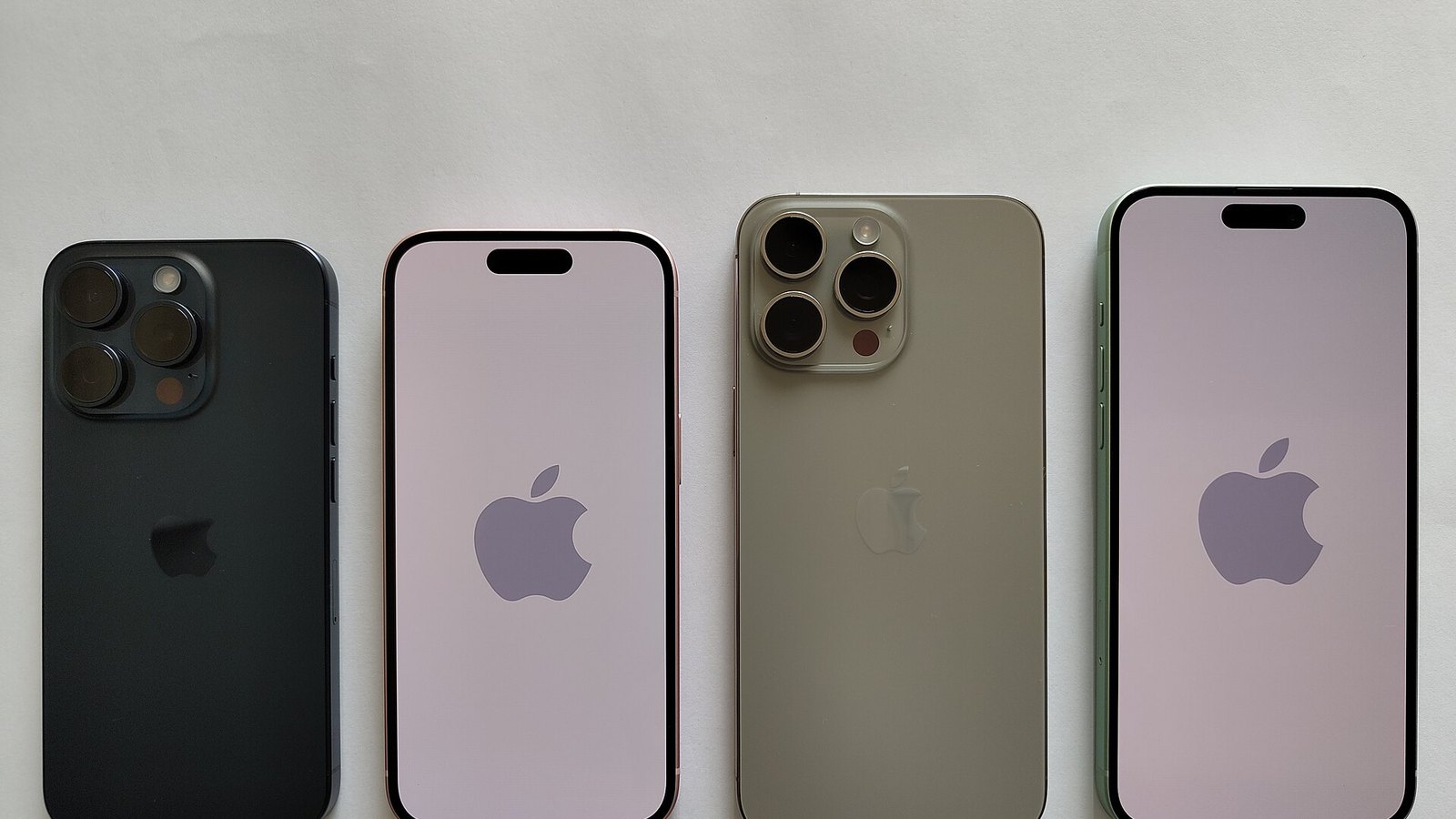
| Colors | Black Titanium, White Titanium, Blue Titanium, Natural Titanium |
| SIM | eSIM only (US models), dual eSIM; nano-SIM plus eSIM in most other regions |
| Biometrics | Face ID |
What was new on the iPhone 15 Pro Max
The 15 Pro Max did not change Apple’s large Pro phone completely, but it delivered more meaningful upgrades than most annual iPhone releases. Four changes stand out, and each one still affects how the phone feels to use.
Titanium frame and lighter weight
Apple replaced the stainless steel frame of the 14 Pro Max with Grade 5 titanium bonded to an internal aluminum substructure. The result weighed 221 grams, 19 grams less than the 240-gram 14 Pro Max. That difference sounds small on paper, but it is easy to notice on a phone this size. Apple also rounded the edges and narrowed the bezels, which made the 6.7-inch body easier to hold than earlier Max models.
The brushed titanium finish came in four colors. Natural Titanium was the signature shade and the one Apple featured most. Blue Titanium is a dark navy, White Titanium is closer to silver than bright white, and Black Titanium is the most understated. Fingerprints show much less on titanium than they did on the polished steel of older Pro phones. The internal redesign also made the back glass easier and cheaper to replace, which matters if you plan to keep the phone for several years.
The Action button
The Ring/Silent switch that iPhones had used since 2007 was replaced by a programmable Action button. By default, a long press toggles silent mode. You can also set it to open the camera, turn on the flashlight, start a voice memo, set a Focus mode, launch the Magnifier, run Translate (added in iOS 17.2) or trigger any Shortcut. Since iOS 18.4, it can also launch Visual Intelligence, which matters because the 15 Pro Max lacks the Camera Control button that newer models use for that feature.
I think assigning a Shortcut is the best use of the button. It can turn on a hotspot, log a habit or start a timer, depending on how you use your phone. Anyone upgrading from an iPhone 13 will need a few days to stop reaching for the old switch, but the Action button is more useful once you get used to it.
USB-C with USB 3 speeds
The 15 series was the first iPhone generation with USB-C, a change largely driven by European Union rules. Only the Pro models support USB 3 at up to 10Gb/s. The base iPhone 15 stays at USB 2 speeds of 480Mb/s. On the Pro Max, that extra speed makes it practical to move large ProRes video files to a Mac and to record ProRes at 4K 60fps directly to an external SSD.
USB-C also brings everyday convenience. One cable can charge the phone, a MacBook and an iPad. The phone can also power small accessories at up to 4.5W, such as an Apple Watch puck or an earbuds case. Apple released a refreshed AirPods Pro 2 with a USB-C case at the same September 2023 event, so the two products pair well.
Buying tip
The cable Apple included in the box is USB 2 only. To get 10Gb/s transfers, you need a USB 3 rated USB-C cable, sold separately.
A17 Pro, the first 3nm phone chip
The A17 Pro was the first smartphone chip built on a 3-nanometer process, made by TSMC. Apple claimed up to 10% faster CPU performance and up to 20% faster GPU performance compared with the A16 Bionic. The bigger change was hardware-accelerated ray tracing, which Apple said ran up to four times faster than software ray tracing. The 16-core Neural Engine is rated at 35 trillion operations per second, double the A16, and that capacity is a large part of why Apple Intelligence runs on this phone and not on the base iPhone 15.
Display and Dynamic Island
The 6.7-inch Super Retina XDR panel has the same resolution and 460 ppi pixel density as the 14 Pro Max, so the display itself was not a major upgrade. It remains excellent. ProMotion adjusts the refresh rate up to 120Hz for scrolling and games, and down to 1Hz for the Always-On display, which shows the time, widgets and dimmed wallpaper without much battery drain.
Brightness reaches 2,000 nits in direct sunlight and 1,600 nits for HDR content. The panel can also dim to 1 nit, which makes reading at night more comfortable. Newer Pro Max models go further. The 17 Pro Max reaches 3,000 nits outdoors and has a stronger anti-reflective coating. Still, I do not consider the 15 Pro Max screen a weakness in daily use.
The Dynamic Island, which first appeared on the 14 Pro models, sits at the top of the display. It shows live activities such as timers, navigation, sports scores, calls and music playback, and it expands when tapped. It works well in practice and gets more useful as more apps support Live Activities.
Performance and gaming on the A17 Pro
In day-to-day use, the A17 Pro is still more than fast enough, even several years after launch. Apps open quickly, 48MP image processing finishes almost instantly, and 8GB of RAM keeps more apps in memory than the 6GB of the 14 Pro Max. That RAM increase was also the hardware requirement for Apple Intelligence, which explains why Apple limited the features to Pro models in 2023.
Apple focused heavily on gaming at launch. It announced native iPhone versions of Resident Evil Village, the Resident Evil 4 remake, Death Stranding and Assassin’s Creed Mirage, which had previously been console and PC titles. Ray tracing makes reflections and lighting look better in supported games. However, these demanding titles push the phone to its thermal limits, and that leads to the phone’s best-known early problem.
Watch out
Early units ran hot. Apple blamed an iOS 17 bug and some third-party apps, and fixed it with iOS 17.0.3 in October 2023. Heavy gaming still makes the frame warm.
The heat complaints spread quickly in the first weeks after launch. Apple said the titanium was not the cause and pointed to a software issue, plus apps such as Instagram, Uber and Asphalt 9 that were overloading the processor. The October update fixed most of the complaints. A phone running current software is fine for normal use, but it has no vapor chamber like the 17 Pro Max, so long gaming sessions will lower performance more than they would on Apple’s newest phones.
The iPhone 15 Pro Max camera system explained
The camera system was the main reason to buy the Max over the smaller 15 Pro. In 2023, it was the only iPhone with a 5x telephoto. The other two cameras are shared with the 15 Pro and are very good.
| Camera | Sensor and lens | Key features |
|---|---|---|
| Main (Wide) | 48MP, 24mm, f/1.78 | Second-gen sensor-shift OIS, 24MP default output, 28mm and 35mm presets, 2x optical-quality crop |
| Ultra Wide | 12MP, 13mm, f/2.2 | 120-degree field of view, macro photography from 2 cm |
| Telephoto | 12MP, 120mm, f/2.8 | 5x optical zoom, tetraprism folded design, 3D sensor-shift OIS and autofocus, up to 25x digital zoom |
| Front (TrueDepth) | 12MP, f/1.9 | Autofocus, Night mode, Photonic Engine, 4K 60fps video |
| Depth | LiDAR Scanner | Faster autofocus in low light, Night mode portraits |
The 48MP main camera and focal length presets
Apple reused the 48MP sensor format from the 14 Pro but improved its processing. By default, the 15 Pro Max outputs 24MP photos, a new setting that balances detail against file size. Apple combines data from a full-resolution 48MP capture with a pixel-binned 12MP capture to improve light sensitivity. Full 48MP images are still available in HEIF or Apple ProRAW when you want the most detail for cropping.
A tap on the 1x button switches between 24mm, 28mm and 35mm equivalent framing. You can also set one of these as the default. I find 28mm and 35mm better suited to street photography and portraits of people than the wide 24mm view. There is also a 2x option, which uses the middle 12MP of the sensor to produce a 48mm image without upscaling.
Higher resolution does not automatically mean better photos. Sensor size, processing and lens quality matter just as much. Pixel binning is the reason this camera handles low light well despite having so many pixels on a phone sensor.
The 5x tetraprism telephoto
Folding a 120mm lens into a 8.25 mm-thick phone required a redesign. Apple’s tetraprism reflects incoming light four times inside the camera module, which creates enough optical path length for a 5x focal length without a large camera bump. The 3D sensor-shift stabilization moves the sensor itself to compensate for hand shake, which is critical at this magnification.
In practice, 5x is a useful length for concerts, kids’ sports, wildlife at a distance and tight portraits. With f/2.8 and a 12MP sensor, telephoto shots in low light are noticeably softer than main camera photos. In dim conditions, the phone sometimes switches to a crop from the main sensor instead of the telephoto lens. Reviewers generally rated it among the best zoom cameras of 2023. It did not beat Samsung’s Galaxy S24 Ultra at extreme zoom, but it looked more natural at 5x.
The trade-off is the gap in focal lengths. With 1x, 2x and 5x, there is nothing optical between 48mm and 120mm. The 3x 77mm lens on the iPhone 15 Pro is often the better choice for portraits indoors, so it depends on what you photograph most.
Ultra wide, macro and next-generation portraits
The 12MP ultra-wide camera is good but not outstanding. Its smaller pixels and f/2.2 aperture show noise sooner in dim light than the main camera. Apple later moved this lens to 48MP on the 16 Pro family. Its strength is macro photography: the phone switches to it automatically when you get within about 2 cm of a subject, which works well for flowers, textures and food.
Portraits got a clever upgrade in this generation. When a person, dog or cat is in frame, the camera saves depth information automatically even in regular Photo mode. That lets you turn a standard shot into a portrait later and change the focus point after the fact. Night mode portraits use the LiDAR Scanner to separate subject and background in low light, an area where earlier iPhones often struggled.
Video: ProRes, Log and spatial capture
For video, the 15 Pro Max offers features normally associated with professional cameras. It records ProRes up to 4K 60fps, but only to an external drive over USB-C, and up to 4K 30fps to internal storage. It also added Log encoding, which records a flat image with more dynamic range so editors can color grade it, and support for the Academy Color Encoding System (ACES). This is a big part of why the phone appears in professional productions.
Standard 4K video runs at 24, 25, 30 or 60fps with Dolby Vision HDR. Cinematic mode is limited to 4K 30fps, and Action mode provides strong stabilization in exchange for some resolution. With iOS 17.2, Apple enabled spatial video capture using the main and ultra-wide cameras together to record 1080p 30fps 3D clips for Apple Vision Pro. One feature it lacks is 4K 120fps slow motion, which arrived on the 16 Pro family.
Battery life and charging
Apple rates the 15 Pro Max for up to 29 hours of local video playback, 25 hours of streamed video and 95 hours of audio. The 15 Pro is rated at 23 hours. In practice, that means a full day of heavy use for most people, with some battery left over for lighter users. The 16 Pro Max and 17 Pro Max carry higher ratings, so this is a strong result but no longer a leading one.
| Charging method | iPhone 15 Pro Max |
|---|---|
| Wired (Apple claim) | Up to 50% in about 30 minutes with a 20W or higher adapter |
| Wired (independent tests) | Peaks generally measured in the high-20-watt range |
| MagSafe | Up to 15W |
| Qi2 | Up to 15W (enabled with iOS 17.2) |
| Standard Qi | Up to 7.5W |
| Accessory charging (wired) | Up to 4.5W out over USB-C |
| Charger in box | None (USB-C cable only) |
Charging speed is where the phone shows its age most clearly. Samsung’s flagships charge at 45W, and the 17 Pro Max reaches 50% in about 20 minutes with Apple’s 40W adapter. The 15 Pro Max needs about half an hour to reach 50% and noticeably longer to reach a full charge. Qi2 support does make magnetic third-party chargers useful, since certified Qi2 pads reach the same 15W as Apple’s MagSafe puck.
Battery health is easier to check than on older iPhones. The 15 series was the first to show cycle count, manufacture date and first-use date under Settings, General, About. iOS 17 also added an 80% charge limit to slow long-term battery wear. Apple later updated its guidance to say the iPhone 15 battery is designed to keep 80% of its original capacity after 1,000 full cycles, double the 500-cycle figure it gives for older models.
Buying tip
When buying used, check the cycle count in Settings, General, About, along with Battery Health. Under 500 cycles and above 85% capacity is a good sign.
Software, Apple Intelligence and support
The phone shipped with iOS 17 and runs iOS 26. Apple does not publish a fixed support period for iPhones, but recent iPhones have typically received about six to seven years of major iOS updates. I expect the 15 Pro Max to stay supported for some time, especially since its 8GB of RAM meets the Apple Intelligence baseline that Apple is building its software around.
Apple Intelligence on this phone includes Writing Tools for rewriting and proofreading text, Clean Up for removing objects in Photos, Genmoji, Image Playground, notification summaries, a redesigned Siri with ChatGPT integration, and Visual Intelligence through the Action button or Control Center. These features run on Apple’s on-device models with Private Cloud Compute for heavier tasks. The base iPhone 15 and 15 Plus did not get them, which has made the Pro models more valuable on the used market.
The satellite features add real safety value. Emergency SOS via satellite, Roadside Assistance via satellite and Messages via satellite (iOS 18 and later in supported regions) work where there is no cellular or Wi-Fi coverage. Crash Detection is also included. These features work in a defined list of countries, not worldwide, so check coverage before traveling.
What I like and what I don’t
These lists are based on Apple’s specifications, the phone’s track record since launch, and the consistent conclusions of major reviews. I have not run my own benchmarks.
What I like
- The 5x telephoto offers a true optical zoom that the 15 Pro and base models cannot match.
- The titanium build makes a 6.7-inch phone noticeably lighter and easier to hold than the 14 Pro Max.
- USB 3 speeds and external ProRes recording make it useful for serious video work.
- Apple Intelligence support gives it a longer useful life than any other iPhone 15 model.
- The 256GB base storage holds 48MP photos and 4K video without filling up quickly.
- Battery life still lasts a full day for most users.
What I don’t like
- Wired charging is slow compared with Android flagships and Apple’s own newer models.
- The 12MP ultra-wide camera is clearly the weakest of the three rear lenses.
- There is a large gap between 2x and 5x, with no 3x option for indoor portraits.
- The included cable is USB 2, so the fast port goes unused unless you buy another cable.
- The heat issues at launch were fixed, but sustained gaming still causes throttling.
- There is no Camera Control button and no 4K 120fps video, both of which came the following year.
How the iPhone 15 Pro Max compares
The fairest comparisons are with its own sibling, the two Pro Max models that followed, and the base iPhone 17, which now costs less than many 15 Pro Max listings. The table below uses Apple’s official specs for each model.
| Spec | iPhone 15 Pro Max | iPhone 15 Pro | iPhone 16 Pro Max | iPhone 17 Pro Max |
|---|---|---|---|---|
| Chip | A17 Pro | A17 Pro | A18 Pro | A19 Pro |
| RAM | 8GB | 8GB | 8GB | 12GB |
| Display | 6.7 in, 120Hz | 6.1 in, 120Hz | 6.9 in, 120Hz | 6.9 in, 120Hz |
| Peak outdoor brightness | 2,000 nits | 2,000 nits | 2,000 nits | 3,000 nits |
| Main camera | 48MP | 48MP | 48MP | 48MP |
| Ultra wide | 12MP | 12MP | 48MP | 48MP |
| Telephoto | 12MP 5x | 12MP 3x | 12MP 5x | 48MP 4x |
| Front camera | 12MP | 12MP | 12MP | 18MP Center Stage |
| Video playback (Apple) | 29 hours | 23 hours | 33 hours | Higher than 16 Pro Max |
| Frame | Titanium | Titanium | Titanium | Aluminum unibody |
| Weight | 221 g | 187 g | 227 g | 231 g |
| Camera Control | No | No | Yes | Yes |
| Wi-Fi | 6E | 6E | 7 | 7 |
| Base storage | 256GB | 128GB | 256GB | 256GB |
| US launch price | $1,199 | $999 | $1,199 | $1,199 |
iPhone 15 Pro Max vs iPhone 15 Pro
These two phones share the same chip, RAM, main camera, ultra-wide camera, titanium design and software features. The differences come down to size, battery and the telephoto lens. The 15 Pro has a 6.1-inch display, weighs 187 grams and uses a 3x 77mm telephoto. The Max gives you more screen, about six extra hours of rated video playback and the 5x lens.
iPhone 15 Pro pros: much easier to use with one hand, lighter, and the 3x lens is better for portraits and indoor shots. Cons: shorter battery life, a smaller screen for video and games, and a 128GB base model that fills up quickly.
iPhone 15 Pro Max pros: longer battery life, a larger display, 5x zoom and 256GB of base storage. Cons: heavy and wide in a pocket, and the 5x lens leaves a gap for mid-range portraits.
I would choose the Max for battery life alone. The 15 Pro is the better option only if you strongly prefer a smaller phone.
iPhone 15 Pro Max vs iPhone 16 Pro Max
The 16 Pro Max launched at the same $1,199 price in September 2024. It added a larger 6.9-inch display, a 48MP ultra-wide camera, 4K 120fps Dolby Vision video, the Camera Control button, Wi-Fi 7, the A18 Pro chip and a 33-hour video rating. The 5x telephoto moved to the smaller 16 Pro, so the gap between Apple’s two Pro sizes disappeared.
iPhone 16 Pro Max pros: better battery life, much better ultra-wide and macro photos, slow-motion 4K, and faster MagSafe charging with the right adapter. Cons: still 8GB of RAM, a larger and heavier body, and little difference in everyday use.
iPhone 15 Pro Max pros: usually cheaper on the refurbished and used market, lighter, with the same Apple Intelligence features. Cons: a weaker ultra-wide camera, a dimmer feature set for video creators, and no Camera Control.
If you can find a 16 Pro Max for a small price premium, it is the better phone. If the price gap is large, the 15 Pro Max gives up little that most people would miss.
iPhone 15 Pro Max vs iPhone 17 Pro Max
The 17 Pro Max, released in September 2025, is the most different model in Apple’s large Pro line in years. It switches to an aluminum unibody with a vapor chamber for cooling, increases RAM to 12GB, uses a 48MP 4x telephoto at 100mm with an 8x optical-quality crop, adds an 18MP Center Stage front camera, and supports 40W wired charging. It starts at $1,199 with 256GB, and storage goes up to 2TB.
iPhone 17 Pro Max pros: much better sustained performance, a much better telephoto camera, faster charging, a brighter display and the longest battery rating of any iPhone in this comparison. Cons: full flagship price, heavier, and some buyers prefer the look of titanium.
iPhone 15 Pro Max pros: costs much less, is lighter, and still gets the same core Apple Intelligence features. Cons: older in almost every hardware category that matters to enthusiasts.
iPhone 15 Pro Max vs the base iPhone 17
This is the comparison I find most useful for budget-conscious buyers. The base iPhone 17 starts at $799 with 256GB and now includes a 6.3-inch ProMotion display that reaches 120Hz. It also has the A19 chip, 8GB of RAM, a 48MP main camera, a 48MP ultra-wide, and the 18MP Center Stage front camera. It does not have a telephoto lens, LiDAR, ProRes or USB 3 speeds.
iPhone 17 pros: brand new with a full warranty, a newer chip, a better ultra-wide and front camera, and a longer expected software life. Cons: a smaller screen and no optical zoom beyond the 2x crop from the main sensor.
iPhone 15 Pro Max pros: a 6.7-inch screen, a real 5x telephoto, pro video features and a titanium build. Cons: older hardware, and you may be buying a used battery.
If optical zoom matters to you, buy the 15 Pro Max. If it does not, the iPhone 17 is the better long-term purchase at a similar or lower price.
iPhone 15 Pro Max vs Samsung Galaxy S24 Ultra
The Galaxy S24 Ultra was the main Android competitor during the 15 Pro Max’s time on sale. It launched in January 2024 at $1,299.99 for 256GB and uses the Snapdragon 8 Gen 3 for Galaxy, a specially tuned version of Qualcomm’s top chip at the time. Anyone familiar with how Snapdragon processor tiers compare will recognize it as a leading performer.
| Spec | iPhone 15 Pro Max | Galaxy S24 Ultra |
|---|---|---|
| Chip | A17 Pro | Snapdragon 8 Gen 3 for Galaxy |
| RAM | 8GB | 12GB |
| Display | 6.7 in, 2796 x 1290, 120Hz | 6.8 in, QHD+, 1 to 120Hz |
| Main camera | 48MP | 200MP |
| Zoom cameras | 12MP 5x | 10MP 3x, 50MP 5x |
| Battery | 4,422 mAh | 5,000 mAh |
| Wired charging | About 30 min to 50% | 45W |
| Stylus | No | Built-in S Pen |
| Weight | 221 g | 232 g |
| US launch price | $1,199 (256GB) | $1,299.99 (256GB) |
Galaxy S24 Ultra pros: two telephoto cameras, faster charging, the S Pen, and Samsung’s promise of seven years of OS updates. Cons: a heavier, squarer body and processing that some viewers find too sharp. iPhone 15 Pro Max pros: more natural-looking photos and video, stronger video tools, and better integration with Macs, iPads and AirPods. Cons: slower charging and less flexibility at long zoom. Your current ecosystem should decide this more than the spec sheet.
Price, storage and where to buy
Apple raised the starting price by $100 compared with the 14 Pro Max, but doubled the base storage from 128GB to 256GB, so it was a reasonable trade. These were the official launch prices.
| Storage | US launch price | UK launch price |
|---|---|---|
| 256GB | $1,199 | £1,199 |
| 512GB | $1,399 | £1,399 |
| 1TB | $1,599 | £1,599 |
Prices on the market today vary much more. New stock is now limited to carrier and retailer leftovers, and refurbished and used prices depend on storage, color, battery health and cosmetic condition. I will not give a single price because those numbers change weekly. My advice is to compare the price of a refurbished 15 Pro Max with a new base iPhone 17 at $799 before buying. If the 15 Pro Max costs about the same, you are paying for the 5x lens, the larger screen and the pro video features.
For storage, 256GB is enough for most people. Choose 512GB or 1TB only if you shoot 48MP ProRAW, Log or ProRES video, since a single minute of 4K 30fps ProRes uses about 6GB.
Carrier compatibility and buying from carriers or retailers
US carriers including Verizon, AT&T and T-Mobile sold the 15 Pro Max at launch, as did Best Buy and Apple. US models are eSIM only, with no physical SIM tray. They work on all major US networks and also support mmWave 5G, which matters most on Verizon. International models generally keep a nano-SIM tray and do not support mmWave.
A carrier-financed phone may be locked to that carrier until it is paid off. Locked phones are often cheaper, but you cannot switch networks easily. If you plan to use one of the prepaid wireless carriers, buy an unlocked phone or confirm the unlock status with the original carrier before paying. Carriers have their own published unlocking policies, and that is the only legitimate path. Avoid any seller who offers a workaround.
Checklist for buying a used or refurbished iPhone 15 Pro Max
The used market is where this phone offers the most value, and also where the risk is highest. Before you pay, check these points:
- Activation Lock is off. The seller must sign out of their Apple Account and turn off Find My before handing over the phone. If the phone asks for someone else’s Apple Account on setup, walk away.
- Battery cycle count and health. Both are shown in Settings. A low cycle count is more important than the health percentage alone.
- Parts and service history. Under Settings, General, About, iOS shows whether the display, battery or camera were replaced and whether the parts are genuine Apple parts.
- Unlocked or carrier-locked status. Ask directly and check with the carrier if the listing is unclear.
- The correct model. Confirm it is the Pro Max and not the 15 Pro. The 5x lens sits in the lower position of the camera module, and the model is listed under Settings, General, About.
- Warranty. Certified refurbished units from Apple or major retailers usually include a warranty. Private sales usually do not.
Which should you choose?
My position is simple. Buy the iPhone 15 Pro Max today if you want a large screen, a real 5x optical zoom and Apple Intelligence at a lower price than Apple’s current flagships, and if you can find a unit with a healthy battery at a fair price. It is the best value model in Apple’s recent Pro Max range for anyone who mostly takes photos, watches video and uses everyday apps.
Choose the base iPhone 17 if you do not care about telephoto photos and want a new phone with a full warranty and the longest expected support period. Choose the 16 Pro Max if the price difference is small, because the 48MP ultra-wide and longer battery life are meaningful upgrades. Choose the 17 Pro Max if you shoot a lot of zoom photos, play demanding games for long periods or care about charging speed, and you are willing to pay flagship prices.
Skip the 15 Pro Max if you are coming from a 14 Pro Max. The upgrade is real but too small to justify the cost. Owners of an iPhone 13 or older, on the other hand, will see a major improvement in camera range, display smoothness, battery life and software support.
Bottom line
The iPhone 15 Pro Max was the generation where Apple’s largest phone got lighter, gained a useful zoom lens and finally switched to USB-C. Its slow charging and average ultra-wide camera are real weaknesses, and newer models clearly beat it on paper. But its 5x telephoto, 8GB of RAM and Apple Intelligence support mean it holds up much better than most phones from 2023. At the right price, it remains one of the smartest iPhone purchases available.
FAQ
Is the iPhone 15 Pro Max still worth buying?
Yes, if the price is right and the battery is in good condition. It runs iOS 26, supports Apple Intelligence, and has a 5x telephoto that no base iPhone offers. If a refurbished unit costs about as much as a new iPhone 17, the 15 Pro Max is the better choice only if you value optical zoom and a larger screen.
Does the iPhone 15 Pro Max support Apple Intelligence?
Yes. It has the A17 Pro chip and 8GB of RAM, which meet Apple’s requirements. The iPhone 15 and 15 Plus do not support Apple Intelligence, so the Pro models are the only 2023 iPhones that get Writing Tools, Clean Up, Genmoji and Visual Intelligence.
What is the battery capacity of the iPhone 15 Pro Max?
Apple does not publish battery capacity, but regulatory filings list 4,422 mAh. Apple rates the phone for up to 29 hours of video playback and 95 hours of audio playback.
How fast does the iPhone 15 Pro Max charge?
Apple says it reaches 50% in about 30 minutes with a 20W or higher USB-C adapter. MagSafe and Qi2 chargers reach up to 15W, and standard Qi chargers reach 7.5W. No charger comes in the box.
What colors does the iPhone 15 Pro Max come in?
Four colors: Natural Titanium, Blue Titanium, White Titanium and Black Titanium. All four use a brushed titanium frame with a matching textured matte glass back.
What is the difference between the iPhone 15 Pro and 15 Pro Max?
They share the same chip, RAM, main camera and ultra-wide camera. The Pro Max has a 6.7-inch display instead of 6.1 inches, a 5x telephoto instead of 3x, longer battery life (29 hours versus 23 hours of video), and 256GB of base storage instead of 128GB.
Is the iPhone 15 Pro Max waterproof?
It is rated IP68, which means it resists water up to 6 meters for up to 30 minutes in Apple’s lab conditions. Water resistance wears down over time, and Apple’s warranty does not cover liquid damage.